This is my own Menu of Self-Care in action. I decided to share this toward the end of October — so it’s more of a snapshot than a perfectly tracked challenge. A good place to start, I think.
It was also my 60th birthday month, and I began a new medication and treatment, which made this a bit of a messy month for self-care focus. Chances are, you’ll have messy months too.
Even so, I’m proud of my progress. My scores aren’t the highest, but they’re real. I used my simple tracking system (and I’m sharing it below). For 28 days, my goal was to score 2 points per self-care action each day, making a total of 56.
2 = completed fully
1 = did something
0 = didn’t do it
Including a “1” for partial effort keeps me motivated — it reminds me that simply starting matters.
Try it yourself. You might be surprised how small consistency builds real momentum.
My Menu in October 2025
My core Menu of Self-Care includes practices I’ve followed for many months, with a few new challenges added in.
The main challenge to explore this month was the ‘Ease Constipation Challenge’ from the Practical Self-care Pathway. Although at first glance I thought I was already doing most of this already, once I started the challenge I realised:
I was not as consistent with these on a daily basis as I had assumed – being more consistent made a difference.
Increasing the intensity of each practice just a little bit also made a difference to my results.
These were reflections from my body – wonder what your body will tell you?
My October Self-Care Tracking Snapshot
This month, I started using my new Living Menu Tracker — a colour-coded system that turns daily habits into a visual story. Each self-care practice is scored out of 56 (2 = completed, 1 = partial, 0 = skipped). As I enter my scores, the chart changes in real time — and seeing those shifts in colour has been incredibly motivating.
At a glance, I can see which practices are thriving (deeper greens) and which need a little more love. My Monthly Average for October was 75%, which feels like solid progress for a month that included new medication, treatment, and my 60th birthday!
This new tracker has become an ‘in real-time’ accountability partner — visual proof that small actions make a difference to the end result.
Stay in touch to see how I get on with my tracking system over the coming months
Insights & Awareness
This month taught me that doing something even on ‘messy’ months can still move me forward and make a difference.
There was a time when I would have given up completely and waited until next month to start again. Experience (lots of messy days) has taught me I can always ‘start again’ and ‘get back up’ as soon as I choose.
While Flaxseed was a game-changer for easing constipation — I was surprised how effective combining regular water, movement and salad greens were.
More proof that often the body just needs basic self-care consistently and at the right amounts.
And what makes it fascinating is that each of us has to find, through experimenting through the challenges’ what works best for our own body
Looking Ahead
In November, I won’t add a new Practical challenge. Instead, I’ll focus on maintaining my existing routines while exploring some of the new Nourish and Align & Uplift practices.
If you’d like to explore alongside me, I’ll share more details in the regular newsletter and in the community. Join Here.
Until Next Month
Thank you for walking alongside me — self-care really is easier when we share the journey.
Until next month, stay curious and kind to yourself. 💛
Your body is constantly speaking to you through sensations, signals, and symptoms — but most of us have forgotten how to listen. This guide shows you how to recognise those messages and use them to create a personalised, responsive self-care practice.
How to Understand Symptoms as Your Body’s Way of Communicating
Why This Matters
The first and greatest self-care skill you can learn is how to listen to the wisdom of your own body. Your body knows what it needs and is constantly communicating with you — if you know how to listen.
What I call body wisdom is a primal survival system — one that wild creatures still use instinctively, yet many of us have forgotten in modern life.
When you reconnect with this natural awareness, you gain:
Personal guidance and insight.
Confidence in your self-care choices.
A sense of partnership instead of frustration.
🌿You and your body are a team — you need each other.
Step 1 – Understanding Body Wisdom
Body wisdom is your ability to develop a deeper connection through active listening. Your body constantly sends feedback through sensations, feelings, and especially symptoms. Becoming aware of this feedback allows you to communicate and respond in real time.
Step 2 – Rethink What Symptoms Mean
Old view: symptoms are problems that need fixing. New view: symptoms are messages — your body’s way of saying, “I need your help.”
When I was in my twenties and struggling with my health, I often felt betrayed by my body. I’d think, “Why can’t it just tell me what’s wrong?” Now I know — it was telling me, through symptoms.
Your body’s goal is to keep you alive. When something is out of balance, its systems send you alerts designed to get your attention.
🌿Example – Dehydration in Action
If you don’t drink enough water, your body starts signalling for help.
Early warning signs:
Thirst
Dry mouth
Tiredness
Dark urine
Less frequent urination
Ignore these, and the signals grow louder: dizziness, headaches, fatigue.
Each symptom is a message:
“Please give me more fluids so I can function well.”
When you respond — and symptoms ease — your body says:
“Thank you, that’s exactly what I needed.”
🌿Next time you feel thirsty or tired, pause and ask:
“What might my body be trying to tell me?”
Step 3 – Listening as a Skill
Before I trained as a medical herbalist, I never listened to my body. I saw fatigue and pain as failure, not feedback. Now I see them as requests for help.
If we were all taught to interpret our symptoms as communication, our health journeys would look very different.
🌿Pain is a “red alert.” It’s your body shouting, “Something needs to change now.”
Step 5 – Start a Two-Way Conversation
You already respond to many signals automatically:
Hungry → eat
Cold → add a layer
Full → stop eating
Now, extend that same awareness to subtler symptoms.
🧘 Try This: Mini Awareness Practice
Notice a symptom.
Ask: What was happening just before it appeared?
Respond: Move, stretch, breathe, drink, or rest.
Observe: Does it ease, worsen, or stay the same?
Example: when I sit writing for too long, I ache. That’s my body saying, “Move me.” I stretch every 25 minutes; the ache fades — message received.
Step 6 – Track Your Symptoms
Think of it like the childhood “hot or cold” game:
Helpful change → symptom eases (warmer)
Unhelpful change → symptom persists (colder)
Tracking helps you discover what truly supports you. You can learn more inside the Free Self-Care Start-Up Toolkit.
Step 7 – Supporting Your Body Without Silencing It
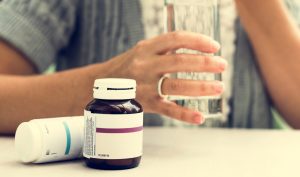
Medical Patient Drug Care Concept
Painkillers and medications are often essential tools that make life manageable. They quiet symptoms so you can function, rest, and recover — an important part of healing.
What’s helpful is to stay gently curious about what’s happening underneath:
“What might my body still need, even while I’m managing this symptom?”
Think of relief as a window of support — a time when your body has less stress and more capacity to heal.
Whether symptoms are temporary or ongoing:
Relief allows rest.
Awareness maintains connection.
Together they support long-term wellbeing.
🌿Using medication wisely and compassionately is self-care. Listening simply helps you work with your body, not against it.
Step 8 – Notice Subtlety and Responsiveness
Every body speaks differently. Some are loud and responsive; others are quieter. The small, easily dismissed sensations — the “just me” moments — are often amber lights asking for early attention.
They’re also the first to change when your self-care is working.
Start small:
When do symptoms appear or fade?
What patterns do you see?
Which actions help most?
🧘 Step 9 – Make It a Daily Dialogue
Check in with your body often:
What do I feel right now?
What is my body asking for?
How does it respond when I listen?
With practice, this becomes second nature — a quiet, steady partnership guiding your wellbeing.
💡 Key Takeaways
Symptoms are communication, not enemies.
Listening is self-care. Awareness is the first step to healing.
Tracking teaches your body’s language.
Relief and awareness can coexist.
Your body wants to feel good too. It just needs your help.
🌿 Reflection Prompt
How might your relationship with your body change if you treated every symptom as a message rather than a problem?
Well-done! You have completed another step towards making selfcare simple
Start practising the art of listening — your body will thank you.
Awareness is powerful — but it becomes transformation when you track and apply it. The toolkit helps you put your insights into practice
Free Self-Care Start-Up Toolkit
Turn inspiration into lasting results — with a simple system that helps self-care finally work with your body, not against it.
If you’ve been reading along and thinking, “I’d love to try this myself one day…” — you don’t have to wait, or wonder where to start.
The Free Self-Care Start-Up Toolkit gives you the gentle structure to make your first challenge easy, personal, and effective. It’s the same step-by-step approach I use when following the challenges alongside you — so you’ll feel supported every step of the way.
Inside, you’ll find: 🌿 A gentle Before Assessment to pinpoint what your body truly needs — so you can stop guessing and start seeing real results 🌿 Step-by-step guidance (plus short video walkthroughs) to choose the right self-care challenge for your needs — and actually complete it. 🌿 Printable planners, reflections, and trackers to help you stay consistent 🌿 Access to our private community (coming soon!) — for gentle accountability and encouragement
You’ll also receive: 💌 Weekly self-care reminders, new challenges, and encouragement in the Make Self-Care Simple newsletter 🪴 Access to our free private community — where women share progress, celebrate wins, and remind each other we’re not alone
🪻 Align & Uplift Pathway — reconnect with calm, joy, and emotional balance
Make Self Care Simple shares general self-care education for inspiration only. I’m not providing medical advice — always check what’s right for you with a qualified health professional.
In week 2 of my Long Covid Histamine SIBO Healing Journey I talk about my first steps after testing positive for SIBO
Have you been diagnosed with both Histamine overload/intolerance HIT (allergies, inflammation, skin issues, food intolerance, MCAS, fatigue) and SIBO (bacterial overgrowth, candida, IBS, bloating, digestive problems, fatigue) issues?
There is a long list of common symptoms which you might be ‘living with’ or ‘managing’ with long-term medications that can be linked to a condition called SIBO (Small Intestinal Bacterial Overgrowth)
Below I share what my first steps were after being tested positive for SIBO in week 2 of my own Long Covid, Histamine & SIBO healing journey.
Please note this is my personal journey, not medical advice.
The SIBO Test Result Practitioner Feedback Video
I had paid to not only have the SIBO test but also have a personal practitioner video (7 minutes) explaining my results and suggested next steps.
In the UK SIBO is not easy to get tested for by your local Dr which is why I paid to go private.
The gist of my message was that it was not good to stay on a restricted diet for any length of time (completely agree) but that I would have to combine low histamine and Sibo diet guidelines and find what worked for me to start with. They provided handouts for both, listing which foods I could eat.
There were very few foods on both lists.
The reality is that I was having daily histamine reactions, my upper stomach was painfully swollen and I just wanted to get better – fast.
Which is why I chose to start with a very strict and limited diet of both low fodmap (sibo) and low histamine diet.
When it came to my SIBO remedies my practitioner was careful to highlight that when you have Histamine Overload or MCAS you have to go carefully and see what your body will react to.
This I have found is a repeating theme.
While both Histamine (MCAS) and SIBO (small intestine bacterial overgrowth) are commonly found together to fix one often causes issues with the other.
I was already taking DAO (Diamine oxidase) an enzyme that breaks histamine down – something that really helps me although if I take more than one capsule my stomach feels weird. It is also expensive. If I know I might be going to eat something that might release histamine I take an extra DAO.
I also take the probiotic Saccharomyces-Boulardii every evening as this helps with Histamine, inflammation and digestive issues as well.
Along with Vitamin C, D and B complex supplements.
Why I take so many Supplements
Yea I spend a fortune on supplements but have taken breaks and researched and tested and these all seem to help my body. In fact I went a couple of months without supplements in case they were causing histamine reactions (common) but actually slowly started to feel worse without them.
The bacteria that shouldn’t be in my small intestine (SIBO) can stop nutrients from being absorbed by the small intestine so you quickly become malnourished.
And being low in vitamins and minerals make it harder for the body to deal with inflammation and histamine or killing off bacteria.
This makes you feel exhausted.
Are Oregano Capsules as good as Antibiotics?
The general opinion (from various research trials) found that essential oil of Oregano kills off ‘bad’ bacteria as well, if not better, than antibiotics when it comes to SIBO.
So this is what my practitioner suggested for me. Along with a prebiotic that encouraged good bacteria.
I was told to start slowly and build up and see how my body reacted.
Massive Reaction to Oregano?
I did start slow with 1 capsule.
All fine.
So the next day I added an evening capsule.
And then I had a massive histamine reaction that lasted days.
Not only did I have swelling around my eye, but I had dizziness and felt faint every time I stood up, my whole body ached from head to toe, my eczema went crazy, my skin erupted on my face, my stomach hurt and my bowel stopped.
In fact the constipation (a new symptom for me) was distressing.
I could not function for 2-3 days.
Being honest, I probably went too fast with the capsules. Maybe one a day for a week or more or even start on alternative days.
Lesson learned.
If you read this and have allergy-type Histamine issues as well as SIBO you might be fine with Oregano Capsules just learn from my experiences and go very s-l-o-w.
Die-off or Reaction? Is the Big Question
Friends asked if it was just Die-off symptoms – a common reaction when you start to kill bacteria, who release chemicals as protection which can give you unpleasant symptoms.
Maybe it was.
But I feel it was a reaction as I am not sure how many bacteria would be killed off with just 3 capsules over 48 hours.
Also essential oils are something I personally often react to – so putting them inside my body was probably not such a good idea?
I was gutted.
But every instinct told me not to take them again.
So back to the drawing board for week 3.
Final thoughts on week 2
I do think that Oregano capsules can be very effective for killing off bacteria in the small intestine (SIBO)
I definitely got impatient and went too quickly – big lesson for the future.
I think that as I seem to have reactions to anything that contains essential oils it makes sense that I would not tolerate ingesting essential oils – even with highly tested capsules.
This is my personal journey to heal myself from both SIBO and Histamine Intolerance that were part of my Long Covid diagnosis. In this blog post I share what I did next after recieiving a positive test for SIBO. Including what I could eat on a low fodmap histamine diet.
I was so relieved to finally have a concrete diagnosis after taking the SIBO test. After years of being told my results were ‘fine’ and ‘normal’, even though I didn’t feel fine or normal a positive results for Hydrogen SIBO felt like progress.
Of course I couldn’t know what was ahead of me – but I remember feeling positive and hopeful.
Histamine intolerance – really overload – (reactions) causes me various unpleasant and unexpected symptoms and SIBO explained a new uncomfortable swelling in my upper stomach – both conditions are linked to each other and Long Covid – you can read more HERE
The private test I paid for included not only the test results, but a 7-minute personal video and healing plan.
My results took about 2 weeks to come back and I made the most of this time.
I spent a lot of this time researching and making lists of foods that are low in both histamine and fodmaps (SIBO)
There is a LOT of information about foods, diet and recipes for low Histamine OR FODMAP but very little about what to eat when you need foods that are low in both!
My low fodmap histamine foodlist list was not very long.
Blueberries are about the only fruit. The only sweetener I could find was pure stevia drops (which I reacted to) or tiny amounts of Maple Syrup.
Nutbutter is essential for many of my recipes and the allowed list includes Pecan (quite bitter) Macadamia nuts (lovely!) and Hemp and Pumpkin seeds.** Check amounts and individual sensitivity. This is enough to enjoy milks, dressings, smoothies and treats!
Potatoes, parsnips, swedes, courgettes, broccoli, carrots, lettuce, kale and cucumber are the main vegetables. Onions are problematic, you can test just the green part of spring onions and leeks, and garlic olive oil.
Rice, oats and quinoa make up the grains. I struggle with rice.
Plaincook from scratch meat, fish and maybe eggs are OK – but if they have anything added they are not allowed. Also you have to freeze and defrost just before you cook. No left-overs hanging around. I had to avoid eggs and my weekly shop included (plain) roast turkey, chicken and salmon. With occassional red meat.
Olive oil and Ghee are both acceptable to cook with. I did get myself some garlic olive oil but had to only add drops to avoid any reaction. I read that full fat Mayonnaise is OK in small amounts ? – I found a brand that I tolerated (thank goodness) watered down to start with.
Vinegar and lemon juice are high in histamine and fodmap and after a lot of research I got myself Verjus** – sour unripe grape juice which in small amounts might be tolerated and tastes like a mellow vinegar.** Update I started to react
Many spices are high histamine and some herbs are high fodmaps so you have to proceed with caution.
Ginger is your best friend for flavour and to soothe your symptoms, to this you can add Turmeric, Cardamom and Lemon Grass.
Chamomile and Hibsicus and many other herbal teas are not allowed. But a pinch of dried herbs as seasoning I think is ok.
Is low histamine and fodmap Foodie Hell?
When I was researching how limited my food choices were – it did feel like foodie hell.
But I decided to focus on what I could eat and how I could adapt traditional recipes.
This was definitely a time to work on my mind-set because any hope of healing was on the other side of weeks/months of this diet.
They call it delayed gratification, go without now so you can enjoy later on.
This was not my forever food plan.
Aim for 90% CleanEating
I aimed for 90% Clean. I included 2 weak cups of green tea, also a dash of almond milk twice a day in my rooibos tea. Once a week I had a Thai green curry and took an extra DAO capsule as I had already found that my body did not react to this. To start with I had watered down full-fat mayonnaise.
The problem is that I was reacting a LOT to things like body products, scents, chemicals, pollen and supplements.
Which wiped me out and while the diet is hugely beneficial it does take effort which you might not have in the beginning
Which is why, despite not being a good cook at all, with questionable taste buds, I have decided to share my recipes.
My Low Histamine/Fodmap Weekly Meal Plan
So here is my simple weekly food plan that is BOTH low histamine and fodmap – suitable for those suffering Histamine overload allergies and intolerances, MCAS, SIBO, Bacterial overgrowth, Gut Issues, with Fatigue
**I’m not a cook – so no measurements or detailed instructions!!!
Oats with Blueberries
I make an overnight oats version that only soaks for a couple of hours or heat gently and serve
I soak the oats and blueberries in ginger tea
I add macadamia or Pecan nut butter
Swap oats for rice flakes or quinoa
Add Stevia or maple syrup to taste
**I can’t tolerate stevia, and find macadamia nut butter sweet enough – but will add a tiny drop of maple syrup with Pecans which I find bitter
Blueberry Smoothie
More or less the same as oat recipe but I replace the oats with allowed greens such as lettuce, cucumber, kale.
Simply blend with cold ginger or mint tea.
This is very useful if the bowel slows down.
Salad, Protein and Potato
This is low fodmap histamine Spanish frittata – eggs and potato with lots of herbs **If you can tolerate eggs
I have potato/protein most days with a large salad!
Potato can be oven chips, jacket spud, new potatoes
Protein can be allowed plain poultry, meat or fish, frozen then defrosted in portion sizes.
Eggs – if tolerated
Salad is lettuce, shredded cabbage, cucumber, grated carrot
Finding a low histamine/fodmap salad dressing is almost impossible! I found that I can tolerate watered down shop-bought mayonnaise. You can use extra virgin olive oil with salt and pepper (helps with constipation). All vinegars and citrus are high histamine – some people can tolerate apple cider vinegar or distilled white vinegar. And most fruits are high fodmaps.
** Fresh lemon juice will be one of the first foods I ‘test’ back into my diet
Vegetable & Protein
So the goal here is to eventually find a gravy or sauce that you can tolerate.
Protein is again from the allowed plain poultry meat or fish list – frozen and defrosted in portion sizes. Eggs if tolerated. My choices include chicken, salmon, turkey with occassional lamb or beef.
My vegetable choices, which I mix and match include:
Broccoli and Carrots
Parsnip mash
Swede and Carrot mash
Sauted Cabbage
*Kale – to be included
*Roasted Radishes – to try!
If tolerated you can add ghee or drizzle olive oil. I season the vegetable water and add herbs and then save some when I drain the veg to make the mash or as a ‘jus’. Or you can save your protein juices as a ‘gravy’. I have found that I can tolerate shop-bought stock and gravy – after first taking a break and then ‘testing’.
Low fodmap/histamine Pesto/dressing
I didn’t want to leave you without sharing this idea! Parmesan and lemon juice are not low histamine or fodmap, nor is yeast flakes.
A low fodmap/histamine Pesto made with:
Fresh Basil, Mint, Parsley or Coriander (Cilantro) leaves
Macadamia or Pecan nut(butter), or Hemp seed or Pumpkin Seed
Extra Virgin Olive Oil or garlic infused oil
Seasoning (Opt chopped green onion leaves or chives)
Blend everything except the oil, which you add slowly. This can be adjusted to use over salad or meat and veg. When I’ve experimented a bit more I will share better details!
Simple Selfcare Tip!
Cook in bulk and freeze in portion size. There will be days when you feel too poorly to cook. Or days that go wrong when you have no time. Trust me it’s worth bulk cooking on ‘good’ days.
I plan to add more recipes but hope this provides ideas to get you started.
Next find out what my first steps were after testing positive for SIBO in week 2 HERE
If nothing else I hope this gives you an idea of what to expect if you suspect Histamine SIBO is the cause of any of your symptoms. Check the start of my journey here.
Developing a self-care practice around my personal healing journey was not only a powerful tool but incredibly empowering. Why not let me help you create your own menu of self-care practices?