Author

Jo

Browsing

You’d think drinking water would be the easiest healthy habit in the world.
And yet… here we are — another day, another half-full glass on the counter.

If plain water feels boring, forgettable, or just impossible to keep up with, you’re in good company. I’ve lost count of how many clients (and days!) I’ve had the same struggle.

That’s why this challenge keeps it as simple as possible — no huge bottles, no timers, no guilt trips.
Just small, steady sips that remind your body what it feels like to be properly hydrated again.

After all, self-care isn’t always about doing more — sometimes it’s just about remembering to drink what’s right in front of you.

Because apparently, coffee doesn’t count (I checked).

Jump to Recipe

The Intention

To gently reintroduce your body to regular hydration and create a rhythm that feels natural.
Like all Make Self-Care Simple challenges, you’re encouraged to adapt it to fit your own energy, lifestyle, and body’s needs.


Try this Challenge If:

  • You suspect you don’t drink enough water
  • You find water boring or forget to drink regularly
  • You struggle with fatigue, headaches, or sluggish digestion
  • You want a simple, low-effort self-care habit that makes a big difference

(Tip: I find this challenge especially helpful in the cooler months when it’s easy to forget to drink.)


Pin for later ?

What Is the Drink More Water Challenge?

Over the next 28 days, you’ll track and celebrate the days you meet your personal water goal.
You’ll start small — just five mini “sips” a day — and see what changes you notice in your energy, skin, and focus.

By the end of the challenge, you’ll have clear feedback on how hydration affects your wellbeing — and you’ll decide if you want to make it part of your regular routine.


Why Water Matters

Water supports nearly every function in your body — from energy and temperature regulation to digestion and brain function.

Even mild dehydration can affect your mood, concentration, and metabolism. Over time, it can also put stress on your kidneys and joints.

So, a little consistency really does go a long way.


How Much Water Do You Need?

There’s no perfect number. Everyone’s needs are different and depend on:

  • Temperature and weather
  • Activity level and sweating
  • Age, gender, health, and medications

Instead of chasing a fixed target, this challenge focuses on habit and awareness.
You’ll simply notice how your body feels as you drink more regularly.


Check-In Before You Begin

Spend one day observing how much you currently drink. Include everything — tea, coffee, smoothies, juice, and water.
Then ask:

  • How much of this is pure water?
  • How do I feel (energy, mood, focus, skin, digestion)?

You’ll use these notes to compare your “before” and “after” once the challenge ends.

The Simple 28-Day Drink More Water Challenge

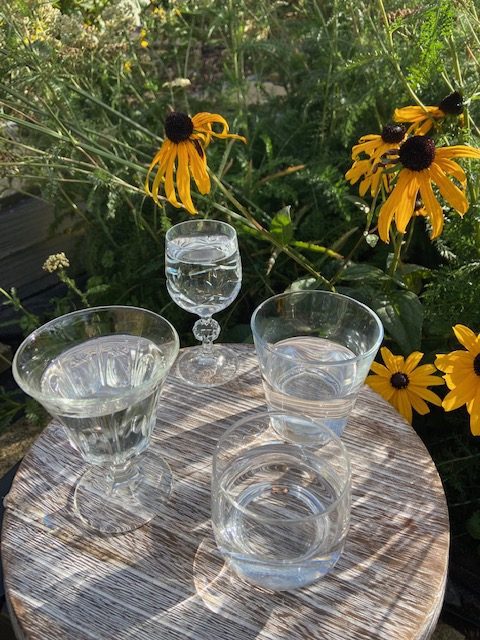
For the next 28 days, drink at least 100 ml (about 3 fluid ounces) of plain water at these times:

1️⃣ Upon waking
2️⃣ Before breakfast
3️⃣ Before lunch
4️⃣ Before dinner
5️⃣ Before bed

That’s just five quick moments a day — about two big gulps each time.
Over 28 days, that adds up to around 14 litres (24½ pints) of pure water.

This is in addition to your normal beverages.


Why This Works

  • Small = achievable. 100 ml at a time feels easy, which helps you stay consistent.
  • Timing = benefit. Drinking before meals supports digestion and helps prevent overeating. Drinking on waking and before bed supports detox and hydration overnight.
  • Habit stacking = success. Pairing water with things you already do (like meals or brushing your teeth) helps make the habit automatic

Can I Drink Warm or Hot Water?

Yes! It all counts — cold, warm, or hot — as long as it’s plain water (no flavourings or sugar).
Some people find warm water easier to drink in cooler weather. Experiment and notice what feels best.


Want to Take It Further?

If this feels easy, you can gently increase:

  • Drink 150–200 ml each time instead of 100 ml
  • Or add another 100 ml after every bathroom break

You’ll get even more benefit without feeling overwhelmed.


Tracking Your Progress
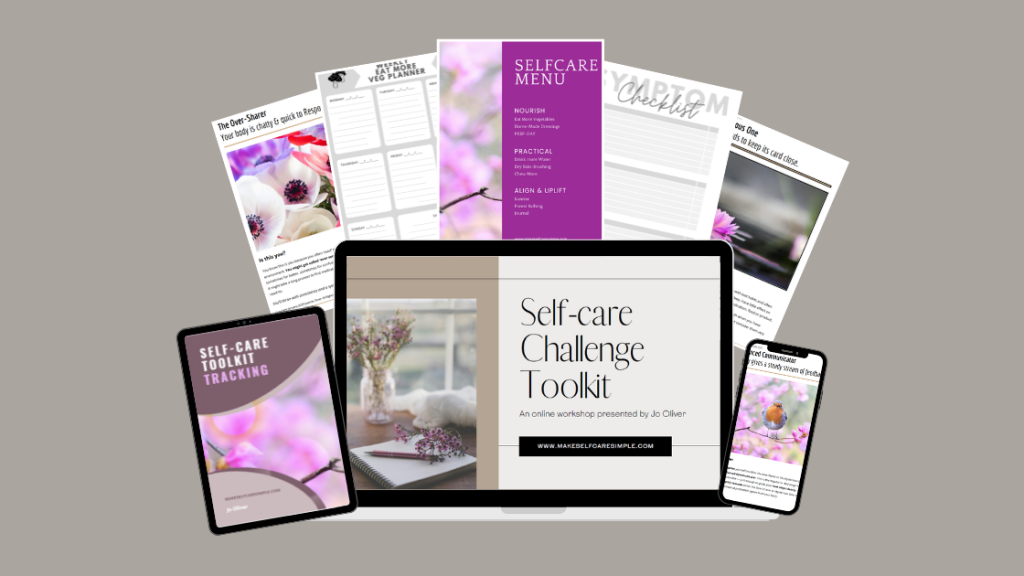
Inside your toolkit

Tracking makes this more fun — and motivating!

Use your Drink More Water Tracker from the Free Self-Care Startup Kit or simply tick off each day in your journal.
After 28 days, compare how you feel.

Common improvements:

  • More steady energy
  • Clearer skin
  • Better digestion and regularity
  • Fewer headaches
  • Improved focus and less fatigue

If you don’t notice much change, that’s okay — it might mean your hydration was already good, or your body needs more time. Either way, awareness is progress.


Reflection & Integration

After 28 days:

  • Review your “before” and “after” notes
  • Notice small wins — even subtle ones
  • Decide if you’d like to continue or increase your daily intake

Remember, consistent small habits make the biggest difference


Final Thoughts — Stay Hydrated (Without the Pressure)

Congratulations on completing your 28-Day Drink More Water Challenge!
You’ve strengthened one of the simplest — and most powerful — self-care habits there is.

If you managed to drink more water than you spilled, forgot, or replaced with tea… that’s a win.
Because every small, consistent sip adds up — to better energy, clearer skin, and a lighter mood.

Keep listening to your body, keep your water nearby, and keep it simple.
And if you ever fall off the hydration wagon, don’t worry — your next sip is always a fresh start.

Why not invite a friend to join you next month? Hydration (like laughter) really is better when shared.

Because apparently, coffee still doesn’t count — but you’re doing brilliantly anyway.

Well done image in Make Self Care Simple brand colours – completion of 28-day self-care challenge
Well-done! You have completed another step towards making selfcare simple

Take the First Step…

We’ve all done it — promised ourselves we’d start that new healthy habit “tomorrow,” and felt oddly proud of the plan… until tomorrow never comes.

The truth is, self-care doesn’t need a perfect day — just a small, curious step today.

Your body learns from action, not intention. The Self-Care Start-Up Toolkit helps you turn what you’ve learned into action — so your self-care finally becomes real, simple, and yours.

Free Self-Care Start-Up Toolkit

Turn inspiration into lasting results — with a simple system that helps self-care finally work with your body, not against it.

If you’ve been reading along and thinking, “I’d love to try this myself one day…” — you don’t have to wait, or wonder where to start.

The Free Self-Care Start-Up Toolkit gives you the gentle structure to make your first challenge easy, personal, and effective.
It’s the same step-by-step approach I use when following the challenges alongside you — so you’ll feel supported every step of the way.

Inside, you’ll find:
🌿 A gentle Before Assessment to pinpoint what your body truly needs — so you can stop guessing and start seeing real results
🌿 Step-by-step guidance (plus short video walkthroughs) to choose the right self-care challenge for your needs — and actually complete it.
🌿 Printable planners, reflections, and trackers to help you stay consistent
🌿 Access to our private community (coming soon!) — for gentle accountability and encouragement

You’ll also receive:
💌 Weekly self-care reminders, new challenges, and encouragement in the Make Self-Care Simple newsletter
🪴 Access to our free private community — where women share progress, celebrate wins, and remind each other we’re not alone

👉 Get Your Free Toolkit & Join the Community

(Part of the Practical Self-Care Pathway — build habits that support your body’s natural balance.)

discover your selfcare blueprint

Make Self Care Simple shares general self-care education for inspiration only. I’m not providing medical advice — always check what’s right for you with a qualified health professional.

©2025 Make Self Care Simple.

Download your free handy challenge reminder!

28-Day Drink More Water Challenge

Prep Time1 day
Total Time28 days

Notes

28-day Drink More Water Challenge

Goal: Build a simple daily hydration habit
Duration: 28 days
You’ll Need: Water, glass or bottle, tracker or journal
Steps:
  1. Track your current intake for 1 day
  2. Drink 100 ml at 5 key times (morning, before meals, before bed)
  3. Log your progress daily
  4. Compare your before/after notes at the end
  5. Optional: Increase amount or frequency after week 2

Just for a second a quiet corner of my mind reminds me of the latest self-care challenge I am ‘testing’ for the blog. The one I am supposed to be doing right now.

Today however, the UK has had its hottest day of the year and despite the best efforts of the fan I’m melting

I really should start this new practice, but I just want to lie on my bed and not move, not do anything. Stay as cool as possible.

The truth is that this potentially health-changing new practice would only take a few minutes, no equipment or effort really needed, and could be done from the bed where I’m now laid.

But I’m also melting in this heat. On the hottest day of the year.

Sound familiar?

Excuses (some more valid than others) are how I self-sabotage my self-care efforts.

I know this because for decades I have been exploring self-sabotage when it comes to self-care. And me and my excuses have become old friends.

Today I want to help you self-sabotage-proof your first challenge so you can win the day. And then the challenge.

Jump to Recipe
Melting in the heat - a self-sabotage excuse?

Do you really want to fail (again)?

Whenever you do anything for the first time your mind can get in the way!

It can feel like self-sabotage, as if there is a part of you that wants you to fail.

This is because your mind is programmed to value known experiences and outcomes.

A cascade of Self-sabotage patterns are triggered when you start to make any new changes.

And these self-sabotage patterns feel like truth.

Sneaky Self-Sabotage Signs that Feel like Truth

It’s helpful to be prepared by knowing what sneaky self-sabotage signs to look for. 

Here are a few common signs I’ve seen in clients and experienced myself.

  • *Keep forgetting/ignoring any reminders
  • *I don’t have enough time/energy etc (Excuses).
  • *Doubts – will this even work? I’ve never heard of this before.
  • *Fears – am I doing this wrong? Will I look foolish or be judged?
  • *Limiting beliefs – this won’t work for me (nothing does)

These (and others) are all examples of how your brain tries to protect you

AND

These thoughts will be accompanied by uncomfortable feelings which strengthen the message.

For example, when you realise you forgot to complete today’s challenge you may also experience a twinge of guilt and mean self-talk ‘I am useless!’

Or with a limiting belief of ‘this won’t work for me’ your mind might remind you of past failures so you experience the remembered pain and frustration of experiencing failure ‘nothing ever works for me’.

BTW I have experienced all of these self-sabotage patterns and so do most people.

Psst… want a simple way to complete your first self-care challenge? Grab my FREE Self-Care Challenge Toolkit and start today

Feelings Self-Sabotage-Proof-Self-care
Human emotion mind map, positive and negative emotions, flowchart concept for presentations and reports

Why would my mind work against me?

Good question. Doesn’t my mind exist to do my bidding?

Er Not always. It’s complicated.

With every new change you make there is always a certain level of risk (will it/won’t it work) and your default protector-brain wants you to avoid risk at all costs.

Your past is sprinkled with painful failures and your mind tries to protect you from making more.

Your brain is wired to survive by avoiding change to reduce new risks/threats.

So the protector-brain uses every tactic in the book to test your resolve before you start something new – clever!

Unless you, the controller, override the programme.

Become the Controller.

Your protector-brain is a very good thing – it looks out for you 24/7 to stop you taking impulsive actions or doing something new without good reason.

The brain is designed with an override button that gives you free will and choice to make new changes that you decide are worth the risk.

Testing new healthy changes is usually worth the risk when it comes to starting your self-care challenge. 

The main risk is no results after wasting a few minutes each day for 28 days.

But unless you override the default programme, the protector brain will trigger self-sabotage patterns even with healthy changes.

The first step to override an over-protective brain is to become aware the instant any self-sabotage pattern starts.

Having read this article, you are one step-closer to notice and question the protector’s thoughts and feelings.

Ah, is this my protector brain?

How to Override your Self-Sabotage Patterns

Then you are going to remind yourself, and your mind, why you chose to do the challenge. You are going to soothe your protector brain into switching the alert off.

You can gently remind yourself.

I am trying this challenge for the next 28-days to see if this is something that my body needs to help it repair and function.

Can you see how reasonable and soothing this reply is?

Instead of ‘I am terrible/useless/hopeless, always trying to self-sabotage myself

Or giving up…

Self-Sabotage-Proof

Don’t Skip This Important Step

In my opening example, what I actually did was to complete some of the self-care practice immediately after recognising my excuse for what it was. A test from my brain!

I actually didn’t do all of the practice (because it was true I was melting in the heat) but enough to reinforce my choice that this is important to me.

The brain will keep trying to test me over the next few days. Do you really want to make this new change?

This is perfectly normal and a sign of a healthy protector-brain.

You might have to hunt down all the sneaky ways your brain tries to stop you making new healthy changes when you start a new self-care challenge

Then make that healthy change as soon as possible to reinforce your decision that this new change (challenge) is important.

Of course self-care is only one area of your life that this happens!

Finally the Good News!

There is some good news…

After a while it does get easier to recognise self-sabotage tactics before they stop you. 

Like myself, you will start to notice your default self-sabotage patterns.

You might be a doubter or excuse-maker like me, or maybe more of a worrier, or perfectionist or something else, just notice how your protector shows up. There is no right or wrong protector!

I found that my self-sabotage patterns especially around self-care (Where I have practiced being the controller the most) has reduced in intensity and is really quite half-hearted these days.

Keep this in Mind…

The aim is for new healthy changes to become automatic habits.

Which is why after the 28-day challenge, if you decide to add this practice to your regular SelfCare Menu, you continue the practice.

Having spent the last 28-days overriding any self-sabotage attempts, and following the practice consistently, you’ve set up this new practice to become another healthy habit.

That runs on automatic. While you focus on other things.

Next Steps

Each time you start a new self-care challenge you can self-sabotage-proof your goals simply by understanding your mind a little better.

I’ve listed ‘Self-Sabotage your Day – Step by Step‘ for you to download in the handy recipe section below. You can download it as a PDF.

Hopefully now you understand why your mind ‘tests’ your resolve to make healthy new changes through self-sabotage tactics you have a new perspective and way forward!

Sometimes to complete the challenge or reach your end-goal you simply have to win the day.

That quiet part of my mind I mentioned at the beginning? It is another part of your brain that is designed to remind you of your goal. Something to discuss next time.

Well done image in Make Self Care Simple brand colours – completion of 28-day self-care challenge
Well-done! You have completed another step towards making selfcare simple

Awareness is powerful — but it becomes transformation when you track and apply it. The toolkit helps you put your insights into practice

Free Self-Care Start-Up Toolkit

Turn inspiration into lasting results — with a simple system that helps self-care finally work with your body, not against it.

If you’ve been reading along and thinking, “I’d love to try this myself one day…” — you don’t have to wait, or wonder where to start.

The Free Self-Care Start-Up Toolkit gives you the gentle structure to make your first challenge easy, personal, and effective.
It’s the same step-by-step approach I use when following the challenges alongside you — so you’ll feel supported every step of the way.

Inside, you’ll find:
🌿 A gentle Before Assessment to pinpoint what your body truly needs — so you can stop guessing and start seeing real results
🌿 Step-by-step guidance (plus short video walkthroughs) to choose the right self-care challenge for your needs — and actually complete it.
🌿 Printable planners, reflections, and trackers to help you stay consistent
🌿 Access to our private community (coming soon!) — for gentle accountability and encouragement

You’ll also receive:
💌 Weekly self-care reminders, new challenges, and encouragement in the Make Self-Care Simple newsletter
🪴 Access to our free private community — where women share progress, celebrate wins, and remind each other we’re not alone

👉 Send Me My Free Toolkit


🧠 MindCraft Pathway — mindset tools to stay consistent and inspired from within.


Make Self Care Simple shares general self-care education for inspiration only. I’m not providing medical advice — always check what’s right for you with a qualified health professional.

©2025 Make Self Care Simple.

Want to remember the key points about self-sabotage? Click the ‘Recipe’ below to print or save a summary!

Self-Sabotage Proof Your day –  Step by Step

Notes

Self-Sabotage Proof Your day –  Step by Step

Step 1
Look-out for your personal self-sabotage signs and patterns. They can surface the moment you go to do something new for the first time, and days later.
They can start off very subtle, just enough to make you pause and hesitate.  But increase in intensity when challenged or ignored.
Step 2
Soothe the protector part of your mind by reminding yourself why you are exploring a new self-care practice. * You will notice that I provide details and links to further information for each self-care challenge.
Step 3
Action your new self-care practice. This reinforces your choice and helps override any self-sabotage. Even if you only do part of it. For instance I used to ‘forget’ to fully chew my first mouthful, so I would chew a later mouthful or put a reminder up. Anything to ‘confirm’ I really do want to test if chewing my food makes a difference.
Step 4
Repeat. You want a strong protector part of your mind, the idea isn’t to shut it down completely. It is simply asking you to confirm you really want to do something new and that is a good thing. And it will test your answer by coming up with another sabotage tactic. 
 

Week 4 of my Long Covid, Histamine & SIBO journey I discover that the combined low histamine and fodmap diet can cause new symptoms – and that one of them might be good news!

New Symptoms on low Histamine & Fodmaps Diet

My restrictive low fodmap (sibo) and histamine diet definitely helped improve the uncomfortable bloating, gas and stretched feeling in my upper stomach.

Although there is still a fullness and slight swelling in that area – I guess housing all those bacteria requires extra room?

And I know from experience that my histamine reactions would be far worse and more frequent if I didn’t avoid the high histamine foods.

So I am definitely confident the diet is supporting my histamine and sibo symptoms while I work on healing the root causes.

However I did start to notice two new symptoms which I think were caused by the diet.

Please note this is my personal journey, not medical advice

Just landed on this page?

You can start from the beginning HERE or Week 3 HERE

Starving Intestinal ‘bad’ Bacteria through Diet

The diet is designed to starve the bacteria of the foods they love to feast on – carbohydrates and yeasts. ** There is no scientific proof of bacteria starving but it feels real when you go through it!

Bacterial signalling is when the bacteria signals your brain that it needs and craves sugar – it can make you feel desperate and emotional – but is really just the bacteria controlling you..

Anyone who has struggled with candida overgrowth will recognise this situation.

Between weeks 3 and 4, I really started to notice cravings. Random images of my favourite past treats – chocolate – kept popping into my head with the emotion of ‘its not fair’ being triggered.

To be fair my diet had been low sugar for quite a while as any refined sugar – even natural stevia, maple syrup, honey, xylitol, and coconut sugars caused horrible skin rashes and boils over my face.

Luckily I am just vain enough to be horrified and quickly remove as much sugar as possible.

** Strangely enough Agave syrup did not cause a histamine reaction – but am sure it is high fodmap and feeds those pesky bacteria.

Instead of succumbing to chocolate (remember the boils!) The cravings sent by the bacteria strengthened my resolve.

I was glad the bacteria were starving, getting weaker.

Because bacteria robbing me of all my nutrients meant I was also getting weaker.

This can slow your Gut Motility (Sluggish Bowel)

The combined low fodmap (sibo) and histamine diet includes resistant starches such as potato, rice, quinoa and oats.

Oats

Resistant Starches are considered beneficial for people with Sibo and IBS as they bypass the small intestines and feed the good bacteria that you need in the large intestines. They are also said to improve the gut barrier and reduce gut permeability.

This is all great.

Just be aware that resistant starches can slow your gut motility – slow your bowel transit time or even cause constipation.

I had enjoyed eating sweet potatoes but the 75g portion size (cooked) had felt challenging to stick to and if you go above this amount sweet potato becomes high fodmap and feeds the bacteria.

Same with oats, I love them, but have noticed that my portion size can creep up.

My typical low fodmap (sibo) & histamine meal plan included one resistant starch and a protein with some of the limited vegetable choices at each meal 

This combination of starch and protein caused my normal transit time to slow right down.

Now for some people a slower bowel transit time would be no problem at all!

But I needed a good transit time because of a crucial new remedy I was keen to begin using. This remedy was known to slow the bowel transit time and yet to work effectively needed to not hang around in the colon for too long.

**More on this new remedy in week 5!

This week was spent exploring how to ease constipation and sluggish bowel naturally – especially when you can’t tolerate or take the usual OTC medications and remedies. It proved so helpful that I turned it into a simple challenge you can try yourself – see HERE.

I almost missed this Obvious Tactic!

In between encouraging my bowel to work better and dealing with bacteria signalling I almost missed an obvious tactic.

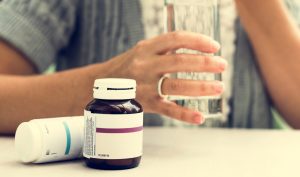
DAO  – Diamine oxidase – is an enzyme that breaks down histamine in the stomach. About 9 months ago I started taking one capsule each morning and it acted like a miracle in reducing the intensity and frequency of my reactions.

As I mentioned before, there is only one brand that suits my body, and honestly it is quite expensive.

As I was searching for more solutions and answers I suddenly realised that maybe I needed to take a 2nd DAO capsule before my evening meal?

Sometimes we almost miss the obvious!

Medical Patient Drug Care Concept

Why More is not always Good

Reducing my intense histamine reactions was a big relief – because the constant reactions impacted my energy levels, cognitive ability, general weakness not to mention potential damage to my eye-sight and vagus nerve. 

However the fact that I needed more DAO was not great news 

One negative was that I would need to order double the amount of expensive tablets!

The other negative was that needing a 2nd DAO Enzyme indicated that my digestion was getting weaker.

This made sense as my diary shows that I was having histamine reactions 4 – 5 days a week and those reactions were to foods/scents etc that previously I had been able to tolerate.

On the days that I remembered to take this 2nd capsule my reactions were milder. I kept forgetting to take them before my evening meal and they don’t work after you’ve eaten. 

My daughter got fed up with her forgetful mum and took action

So now if you meet me late afternoon and hear angry barking – it is just my mobile phone reminding me to take the blasted 2nd DAO!

Summary of week 4

  • Bacterial Signalling – shows up as cravings – and is a positive sign that your diet is starving the bacteria.
  • The restrictive low histamine & Sibo diet can mean that your meals include a larger % of resistant starches with protein which in some people can cause a sluggish bowel
  • Needing to take more DAO Enzyme is a sign that my digestion is getting weaker
  • In order to prepare for a new remedy I need to ensure my bowel has every support I can provide (and tolerate)

Interested in Natural Self-Care?

Hope you found my own (far from perfect) journey helpful on some level – even if it’s just reassuring to know you are not alone on the ups and downs of caring for your body and health!

Why not discover how I use Self-care to support my own journey and explore all the free support that’s included?

This is week 3 of my personal long covid, histamine & SIBO healing journey, including how I respond to self-care setbacks and challenges. This week I explore root causes, how my body got out of balance in the first place.

I’m not going to lie – I felt pretty low after reacting to the Oregano capsules.

I think the SIBO test coming back as positive gave me hope and confidence that I was close to figuring out some answers.

I had spent years dealing with increasingly worse symptoms but the drs could find nothing wrong with me. 

Mast Cell Activation Syndrome (MCAS) described me exactly but here in the UK the hospital told me they do not recognise the condition. And fobbed me off with a general Long Covid label and nothing they could do.

But SIBO (Small Intestinal Bacterial Overgrowth) was starting to be known in the UK and was increasingly being linked to Histamine Overload (or HIT Intolerance) and MCAS.

In theory, if I killed off the bacteria in my small intestines that was causing my immune system to go into overdrive, then healing was in sight? 

I thought I finally had the start of a healing plan.

But if I couldn’t tolerate the medicine – Oregano essential oil capsules – then my plan couldn’t work.

The Dr Calls

My GP called me as I had sent him my SIBO results. He mentioned that I had 10x the amount of bacteria in my small intestines than I should. I have no idea how much extra bacteria other people have with SIBO?

We discussed why so many of my symptoms are only on my right side.

He felt it was nerve damage – Vagus Nerve.

Vagus nerve support was already on my radar – more to come about this.

Because symptoms on my right side were getting worse we discussed b12 being deficient. B12 supports the nervous system and the Vagus nerve.

The bacteria overgrowth in the small intestine block B12 from being absorbed along with many other crucial nutrients – which is a frustrating feedback loop.

Histamine overload is made worse when you are deficient in nutrients (for many important functions) and SIBO makes you deficient in nutrients.

B12 is tricky. I have been low in it before, but the supplement can and does cause reactions when I try to take it.

My GP offered antibiotics and antihistamines if I needed them. And I am grateful to know he will support me should I have no other choice.

A Strategy and Plan B

So I had stopped everything except the DAO, Boulardii and Vitamin C. I kept my diet and environment clean to reduce reactions.

I also started the B Complex (turns your wee yellow) as my body can tolerate that and at least some b vitamins are getting in.

Once I have had a big reaction – my body goes on hyper alert and reacts to tiny things.

It was a tiring week.(few years actually)

But I was curious. What else could I do if essential oil capsules made me react? Was there another natural remedy?

Was SIBO the real root cause? Why did I have SIBO?

Maybe SIBO was just another symptom of a deeper imbalance and root cause?

I was back on the trail of the root cause – which I needed before I could form a strategy and plan B.

 I came across this interesting video about the many root causes of Histamine Intolerance (Overload) which I thought was worth sharing with you.

This video explains why this condition is so complex and if you suspect histamine might be causing your allergies and food intolerances and other random symptoms it is well worth watching to understand possible causes.

I suspected low stomach acid and leaky gut (gut permeability) and the covid viral infection as my main causes of SIBO and Histamine Overload. Contracting Covid after a few years of high level Stress probably impacted Vagus nerve function which directly impacted digestive function.

Discovering my root causes, the reason why my body had become so unbalanced that it was screaming for help through such intense (Histamine & SIBO) symptoms, felt like a huge step forward.

Digestion/Immunity and Vagus nerve/Adrenal stress were where I needed to focus my self-care alongside reducing the symptoms of bacteria in my small intestine and soothing those histamine reactions.

There is no doubt this is a complex condition, made worse because it is not recognised by most health professionals at the early stages – which is why I am sharing my journey.

Herbs to the Rescue?

Herbs of course are a huge passion of mine. Should I try oregano leaf tincture as a much weaker alternative to the essential oil capsules that my body might tolerate – not to mention adding Oregano to every meal?

Having been a herbalist for over 20 years this was something I could explore – if my body could tolerate the remedy. Herbal teas** had been fine so far and a big part of my personal self-care. But to kill bacteria would need a strong tincture.

I would also need to work on the root causes at the same time. Would my body tolerate so many (beloved) herbs and remedies?

I knew this gentle plan could take longer, like months and months on a restricted diet and lifestyle. With the risk that the bacteria blocking essential nutrition and continual histamine reactions could damage my nervous system even more.

** Many healing and wonderful herbal teas are either high histamine or high fodmap – meaning they can make your symptoms worse until you resolve the underlying cause.

Was I being realistic?

Or was this time to see my GP? And if I did would my body cope with various antihistamines? A childhood spent taking endless rounds of antibiotics that had weakened my health 30 years ago, made me wary.

What would I decide to do next?