Tag

wellbeing

Browsing

Hiding veggies isn’t just for fussy children — some days, it’s for us too.

You know vegetables are good for you… but let’s be honest: sometimes they’re boring, sometimes they’re too much effort, and sometimes they just sit in the fridge until they go squishy and guilt-shaped.

Maybe you’ve been told to eat more veggies for your health, or you’ve noticed certain ones help ease your symptoms.
Maybe you simply want to swap a few processed foods for something fresher — without needing a chef’s knife skills or a new personality.

Whatever your reason, this challenge is your gentle nudge to experiment, simplify, and actually enjoy your vegetables — no spiralizers or fancy prep required.

There are countless benefits to eating more vegetables — but the only real way to find out what difference it makes is to try it, track it, and see how your body responds.

So, whether you’re blending, roasting, sneaking, or hiding them under cheese, join us for 28 days of veggie exploration — and see just how much better you can feel (without giving up flavour or your sanity).

Want to save this challenge for later? Jump to the “Challenge Recipe” section below.

Jump to Recipe

About the Challenge

The 28-Day Eat More Vegetables Challenge is a fun, supportive way to get started and stay inspired.

At MakeSelfCareSimple, we always encourage you to discover what works best for you — no rules, no judgment. Each of us is unique, and there’s no one “right” way to nourish yourself.

If you’ve found that certain vegetables don’t suit you, or your practitioner has advised otherwise, always listen to your own body and professional guidance. In that case, simply skip this one and try another self-care challenge that fits you better.

If you’re new here, the Nourish Pathway is all about turning food restrictions into inspiration. Each month we focus on a theme, experiment with recipes, and support one another. Learn more here →

The 28-Day Eat More Vegetable challenge

The Aim

  • To increase the portion of vegetables in your daily meals for 28 consecutive days, and notice what changes you experience.
  • To discover simple, creative ways to include vegetables in your meals.

You can start any day that suits you — though giving yourself a few days to plan and shop can help.

This challenge has two parts:


How to do the challenge

For this challenge, I don’t count white potatoes (chips, mash, jacket, or new) as part of the “vegetable” portion — they can still be included as part of your meal. I do include frozen vegetables.

Your goal:
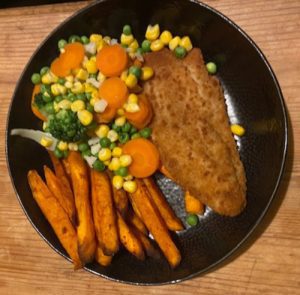
👉 Vegetables should make up at least 51% of your lunch and dinner plates every day for 28 days.

If that feels too much of a jump, start smaller — choose a target that feels doable but still challenges you.

You might decide to focus on specific vegetables that support an area of your wellbeing, or perhaps you’d like to do a mild “cleanse” with more raw salads, organic produce, or seasonal veg.

It’s your challenge — adapt and repeat it as many times as you like.
(And as always, check with your health professional if you have any concerns.)

The key is to see if your wellbeing feels different after 28 days.

51% is easy to see on the plate!
vegetables-makeselfcaresimple

Before You Begin

Reflect on a few questions before you start — they’ll help you measure your “before and after” progress.

  1. What percentage of your meals currently include vegetables?
  2. What do you hope to experience by eating more vegetables?
  3. What might make this challenge difficult, and how can you plan for that?
  4. What are your current symptoms or wellbeing scores? (Record them now to compare later.)

📘 Tip: Use the Self-Care Challenge Toolkit to track your answers and results.

makeselfcaresimple
Read 25 ways to add more veggies to meals for more ideas!

Why do we struggle to eat more vegetables?

After working with clients for many years, I found that everyone has a few habits that are hard to change. That’s completely normal — and awareness is the first step to shifting them.

Common reasons include:

  • Vegetables feel boring, or tasteless. 
  • You don’t have time to cook or prep.
  • Family members have different preferences
  • You don’t like cooking, or your health makes it difficult, and prefer take-out and ready meals.

Identifying your likely hurdles before you begin helps you plan realistic solutions.

What to Prepare.

Before you start:

Stock up on vegetables you already like — and maybe a few new ones to try.

Choose your sources:

  • Supermarket or farmers’ market
  • Organic or local veg box
  • Frozen or pre-prepared mixes
  • Ready-to-use salad or stir-fry packs

List the vegetables you enjoy most, then plan meals that use them.
Start with familiar meals and simply increase the vegetable portion.
Gradually try new combinations or cooking methods from the 25 Ways to Add Veg.
28-day eat More vegetables Challenge makeselfcaresimple.com

If you struggle for Time

You’re not alone! This was always my biggest challenge, especially when I was working long hours and managing fatigue.

Some ideas to make it easier:

  • Cook extra at dinner for next day’s lunch or freeze portions.
  • Have one or two prep sessions each week.
  • Use frozen or pre-chopped vegetables and salad mixes.
  • Prep veg right after shopping and store ready-to-use.
  • Batch cook staples (grains, proteins, soups) and build meals from there.

If you don’t enjoy cooking

Sometimes cooking can feel like another chore that has to be done. Cooking and prep can be difficult when you are in pain, have mobility issues or are exhausted.

Boring-veg-makeselfcaresimple

Here are some ideas I have tried.

  • Make use of the many gadgets available to protect hands and save time
  • Transform preparing meals from a chore to ‘me-time’ – listen to music, podcasts or audio books.
  • Get a stool and perch if standing is painful.
  • Don’t stand for too long in one position – do a 2-minute march, stretch etc.
  •  Cook with a friend! If not in person perhaps you can video chat together?
  • Order meals with plenty of vegetables that are ready-prepared-for-you
  • Take it in turns to cook for each other.


If Vegetables feel Boring

If eating more vegetables could improve your health and wellbeing, it would be a shame if it felt like punishment! I know if faced with half a plate of brussel sprouts twice a day was my solution I would soon give up.

The easiest solution is to hide vegetables in meals that you already enjoy.

I have put together 25 different ways to hide vegetables and found creative recipes from food bloggers.

Use this list as inspiration, and adapt to your preferences and needs.

I’ve put together a list for you HERE

Conclusion — Progress, Not Perfection (and Definitely No Guilt)

Congratulations on completing your 28-Day Eat More Vegetables Challenge!

Whether you’ve become a salad superstar or just managed to sneak spinach into your soup without anyone noticing — it all counts.
Every extra handful of greens, every new recipe, every colourful plate has helped your body in ways you might not even realise yet.

Remember, the goal wasn’t to eat perfectly — it was simply to make your lunch and dinner plates 51% vegetables (not counting potatoes!) and to have fun exploring what works for you.

If your fridge still contains green things at the end of the week because you actually used them — that’s a win.
If you learned a few new ways to make veggies less boring or less time-consuming, even better.

Now it’s time to reflect:

  • What changed in your energy, digestion, mood, or skin?
  • Which recipes or habits did you enjoy most?
  • Will you continue eating this way?

Every self-care challenge teaches you something new about your body — and builds confidence in your ability to create change.

I’d love to hear what you discover — share your results in the comments or our community!

Well done image in Make Self Care Simple brand colours – completion of 28-day self-care challenge
Well-done! You have completed another step towards making selfcare simple

Everything You Need to Start Today

Let’s be honest — most of us love reading about self-care more than we love doing it.
(Don’t worry, you’re in good company — I have a whole library of forgotten Pinterest Boards too)

But reading about self-care won’t get you results — your body only learns when you experience something new.
That’s why I created the Self-Care Start-Up Toolkit — to help you turn ideas into action with simple, nourishing steps you can start today


Free Self-Care Start-Up Toolkit

A gentle way to begin your first challenge with clarity and confidence.

If you’ve been reading along and thinking,
“I’d love to try this myself one day…”
you don’t have to wait or wonder where to start.

The Toolkit gives you a calm, clear place to begin — including short videos, simple printables, and gentle guidance to choose your first challenge in a way that feels personal and doable.


Inside, you’ll find:

🌿 A gentle before-and-after reflection to help you understand what your body may need
🌿 Short video walkthroughs to help you begin your first challenge without overwhelm
🌿 Printable planners and reflection pages to support consistency
🌿 Space to explore what feels nourishing and achievable for you

You’ll also receive:
💌 Weekly self-care reminders, new challenges, and encouragement
💬 Access to our free community (coming soon!) — for gentle support and shared progress

👉 Send Me My Free Toolkit

🌸 Nourish Pathway — simple ways to feed your energy and wellbeing with kindness.

Get results without overwhelm—one small, doable step at a time!


Make Self Care Simple shares general self-care education for inspiration only. I’m not providing medical advice — always check what’s right for you with a qualified health professional.

©2025 Make Self Care Simple.


Save or Print a summary of this challenge with the ‘Challenge recipe’.

28-Day Eat More Vegetables Challenge

Prep Time1 day
Total Time28 days

Equipment

  • 1 peeler
  • 1 knife
  • 1 food processor Optional
  • 1 masher
  • 1 spiraliser

Materials

  • 1 Vegetables which do you like/need?|

Instructions

  • Increase the vegetable portion or lunch & dinner to 51%

Notes

28-day Eat More Vegetables Challenge

The aim of this challenge is to increase the vegetable portion in your daily meals for 28-consecutive-days to see what improvements you notice in your wellbeing.
Another aim of this challenge is to discover creative and simple ways to include vegetables in your daily meals.
Why do you struggle to eat vegetables?
List and score your symptoms before and after the challenge.
Plan meal ideas for the week/month.
The specific goal is that vegetables make up over 51% or over, of your lunch and dinner meals. Every single day for 28 days.
Log your daily progress (see the free printable in Selfcare Startup kit)
Note which recipes you enjoyed the most
What improvements do you notice?
Will you keep this self care practice as part of your regular routine?

If you’re new here, I share a Self-Care Update every month — not a polished highlight reel, but a real look at what’s happening in my body and my healing journey. Here’s November.

1. My Month in a Few Words

I thought this month was going to be “Maintenance,” but it turned out to be a Recovery month between rounds of treatment (antibiotics for SIBO).
It reminded me how unpredictable healing can be.


2. What I Noticed in My Body

The first round of treatment was more intense than expected, and my body spent most of the month trying to find its footing again. I had almost constant histamine reactions, and my system seemed to divert all its energy into calming itself down. (I share my personal SIBO/Histamine journey here)

That meant everything non-essential had to shut down.
If I tried to concentrate for too long, the brain fog arrived.
If I pushed even a little, it felt like I’d run a marathon — exhausted and aching from head to toe.


3. The Self-Care Practices I Returned To

The practice I always return to is supporting my body through what I eat, it’s one of the core practices on my Self-Care Menu (my living list of what actually helps my body).
While my diet often feels restricted, the truth is that what I do (and don’t) eat has the biggest impact on how quickly I feel better or worse.

It’s a constant “give and take” between what my body needs and what I enjoy — and that’s really what personalised self-care is: adjusting, experimenting, and finding the middle ground.


4. What Helped the Most

Listening to my body, then adjusting my practices and daily life, helped the most this month.

I had hoped to add more movement — I’d enjoyed it so much last month — but this wasn’t the time. Instead, I learned to ease off, and to trust that a little bit was better than pushing… and better than doing nothing.

Even on the hardest days, I at least started — even if two minutes later, I needed to stop.


5. What I Adjusted

I had planned to explore some new challenges, but I had to postpone this plan.
There was nothing left in the battery, and pushing myself would have backfired.

I promised these updates would be real — and sometimes real life simply doesn’t go to plan.


6. What I Learned About My Body

My body takes longer to recover than it used to.
To be fair, I had no idea how intense the treatment would be, and it’s easy to forget that medicines that “fix you” also demand a lot from your system.

I kept reminding myself of this whenever frustration crept in.


7. My Gentle Win

I didn’t fight my body.
I didn’t give up.
I didn’t get frustrated (too much).
And I kept resting.

That’s a win.


8. Life Context

You can’t avoid stress.
Life happens, and sometimes it’s scary and you feel powerless to find an answer.
This month had several of those moments.

On weeks like that, self-care becomes less about progress and more about survival — and that still counts.


9. Intention for Next Month

I’m about to start another (longer) round of treatment.
So my intention is simple: nurture my body the best I can.


10. Final Reflection

If you have a month like this, it’s easy to feel like no progress has been made.
My tracking sheet looks a bit grim.

But me and my body are a team.

Some months, I ask my body to step up and do more — and we enjoy the results.
Other months, my body says, “I can’t right now — I need your support.”

And every time I listen, we get a little closer.
That, to me, is a whole new level of progress.

Catch up on Last month or Next month.


If you’re reading this and thinking,
“I want to take better care of myself… but I don’t know where to start,”
you’re not alone.

My Free Self-Care Start-Up Toolkit is a gentle way to begin. Inside, you’ll find tools to help you:

  • tune into what your body needs right now
  • choose one simple self-care practice
  • notice small, meaningful shifts — without pressure

It’s a soft starting point, especially after months like this one.

👉 Download Your Free Toolkit

Free Self-Care Challenge Toolkit

Week 4 of my Long Covid, Histamine & SIBO journey I discover that the combined low histamine and fodmap diet can cause new symptoms – and that one of them might be good news!

New Symptoms on low Histamine & Fodmaps Diet

My restrictive low fodmap (sibo) and histamine diet definitely helped improve the uncomfortable bloating, gas and stretched feeling in my upper stomach.

Although there is still a fullness and slight swelling in that area – I guess housing all those bacteria requires extra room?

And I know from experience that my histamine reactions would be far worse and more frequent if I didn’t avoid the high histamine foods.

So I am definitely confident the diet is supporting my histamine and sibo symptoms while I work on healing the root causes.

However I did start to notice two new symptoms which I think were caused by the diet.

Please note this is my personal journey, not medical advice

Just landed on this page?

You can start from the beginning HERE or Week 3 HERE

Starving Intestinal ‘bad’ Bacteria through Diet

The diet is designed to starve the bacteria of the foods they love to feast on – carbohydrates and yeasts. ** There is no scientific proof of bacteria starving but it feels real when you go through it!

Bacterial signalling is when the bacteria signals your brain that it needs and craves sugar – it can make you feel desperate and emotional – but is really just the bacteria controlling you..

Anyone who has struggled with candida overgrowth will recognise this situation.

Between weeks 3 and 4, I really started to notice cravings. Random images of my favourite past treats – chocolate – kept popping into my head with the emotion of ‘its not fair’ being triggered.

To be fair my diet had been low sugar for quite a while as any refined sugar – even natural stevia, maple syrup, honey, xylitol, and coconut sugars caused horrible skin rashes and boils over my face.

Luckily I am just vain enough to be horrified and quickly remove as much sugar as possible.

** Strangely enough Agave syrup did not cause a histamine reaction – but am sure it is high fodmap and feeds those pesky bacteria.

Instead of succumbing to chocolate (remember the boils!) The cravings sent by the bacteria strengthened my resolve.

I was glad the bacteria were starving, getting weaker.

Because bacteria robbing me of all my nutrients meant I was also getting weaker.

This can slow your Gut Motility (Sluggish Bowel)

The combined low fodmap (sibo) and histamine diet includes resistant starches such as potato, rice, quinoa and oats.

Oats

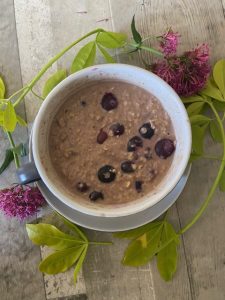
Resistant Starches are considered beneficial for people with Sibo and IBS as they bypass the small intestines and feed the good bacteria that you need in the large intestines. They are also said to improve the gut barrier and reduce gut permeability.

This is all great.

Just be aware that resistant starches can slow your gut motility – slow your bowel transit time or even cause constipation.

I had enjoyed eating sweet potatoes but the 75g portion size (cooked) had felt challenging to stick to and if you go above this amount sweet potato becomes high fodmap and feeds the bacteria.

Same with oats, I love them, but have noticed that my portion size can creep up.

My typical low fodmap (sibo) & histamine meal plan included one resistant starch and a protein with some of the limited vegetable choices at each meal 

This combination of starch and protein caused my normal transit time to slow right down.

Now for some people a slower bowel transit time would be no problem at all!

But I needed a good transit time because of a crucial new remedy I was keen to begin using. This remedy was known to slow the bowel transit time and yet to work effectively needed to not hang around in the colon for too long.

**More on this new remedy in week 5!

This week was spent exploring how to ease constipation and sluggish bowel naturally – especially when you can’t tolerate or take the usual OTC medications and remedies. It proved so helpful that I turned it into a simple challenge you can try yourself – see HERE.

I almost missed this Obvious Tactic!

In between encouraging my bowel to work better and dealing with bacteria signalling I almost missed an obvious tactic.

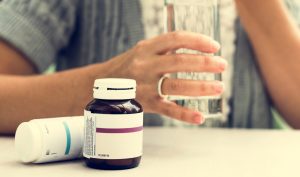
DAO  – Diamine oxidase – is an enzyme that breaks down histamine in the stomach. About 9 months ago I started taking one capsule each morning and it acted like a miracle in reducing the intensity and frequency of my reactions.

As I mentioned before, there is only one brand that suits my body, and honestly it is quite expensive.

As I was searching for more solutions and answers I suddenly realised that maybe I needed to take a 2nd DAO capsule before my evening meal?

Sometimes we almost miss the obvious!

Medical Patient Drug Care Concept

Why More is not always Good

Reducing my intense histamine reactions was a big relief – because the constant reactions impacted my energy levels, cognitive ability, general weakness not to mention potential damage to my eye-sight and vagus nerve. 

However the fact that I needed more DAO was not great news 

One negative was that I would need to order double the amount of expensive tablets!

The other negative was that needing a 2nd DAO Enzyme indicated that my digestion was getting weaker.

This made sense as my diary shows that I was having histamine reactions 4 – 5 days a week and those reactions were to foods/scents etc that previously I had been able to tolerate.

On the days that I remembered to take this 2nd capsule my reactions were milder. I kept forgetting to take them before my evening meal and they don’t work after you’ve eaten. 

My daughter got fed up with her forgetful mum and took action

So now if you meet me late afternoon and hear angry barking – it is just my mobile phone reminding me to take the blasted 2nd DAO!

Summary of week 4

  • Bacterial Signalling – shows up as cravings – and is a positive sign that your diet is starving the bacteria.
  • The restrictive low histamine & Sibo diet can mean that your meals include a larger % of resistant starches with protein which in some people can cause a sluggish bowel
  • Needing to take more DAO Enzyme is a sign that my digestion is getting weaker
  • In order to prepare for a new remedy I need to ensure my bowel has every support I can provide (and tolerate)

Interested in Natural Self-Care?

Hope you found my own (far from perfect) journey helpful on some level – even if it’s just reassuring to know you are not alone on the ups and downs of caring for your body and health!

Why not discover how I use Self-care to support my own journey and explore all the free support that’s included?

There are literally hundreds of self-care practices you could start tomorrow, but how do you decide which ones are worth spending your time doing?

 When you decide to invest precious time, energy and money on your well-being, especially when you are coping with ongoing health conditions, it is worth spending a couple of minutes answering a few questions before you decide if this new self-care is worth exploring.

In the last decade the internet has been buzzing with thousands of healthy choices, ideas and opinions that promise to transform your health. 

This has become a vast resource that is often freely available to everyone who is seeking answers and options.

 On the other hand too much choice can become overwhelming, especially when supporting your health has become an essential factor in your life.

My aim with this blog is to make selfcare simple and help you find the self care practice that gets you results.

To get started I have put together 7 questions to ask before starting a new self care practice.

I have used both my experiences as a natural health practitioner and personal health journey to help explain how to use each question.

Short on time?

If you just want to skip straight to the questions click to the summary at the end.

Benefit of a Clear Strategy

My own self-care practice has changed over the years, depending on what was happening in my life and health journey, and the results I achieved was down to always having a clear strategy behind each self care practice I included.

 In other words, I always know exactly what result I expect to experience from any self-care choices I made.

 In my Natural health clinic, I helped hundreds of clients over many years to create individualised self-care practices.

 In this article I want to help you get started, by sharing questions to ask before starting a new self-care practice.

What is the definition of Self-Care?

Who defines self-care as:

 “Self-care is the ability of individuals, families and communities to promote and maintain their own health, prevent disease, and to cope with illness – with or without the support of a health or care worker.”

 My aim with any self-care practice is to provide one of the following:

  • Improve my current health levels
  • Maintain good health levels
  • Prevent future health issues
  • Better cope and manage existing illness.

A self care practice goes a little deeper than a healthy lifestyle, it is specifically fine tuned to the needs of your individual body and health needs.

Lets dive into the 7 questions to ask before starting a new self-care practice.

1. What benefit can I expect to experience or see?

This is the important question. Will following this self-care practice benefit and improve your individual health levels?

It might sound obvious but in the clinic I had clients spending time and money on popular health practices and products that they did not need. And because their body did not need it, they never experienced the same results as other people.

 Which can leave you feeling frustrated and wondering ‘what is wrong with me?’ or ‘what am I doing wrong?’ or that it doesn’t work and was a waste of time.

 Seeing someone else getting results is a very powerful motivation especially when you are struggling.

 ‘It worked for me, so I’m sure it will help you too’.

 Is a well-meaning phrase, but often a bit of a red herring when it comes to self-care.

The reason why there are so many solutions and none of them work 100% for every person is because you are not an exact copy of everyone else – you and your body are unique and individual and so are your health needs.

Knowing what support your body most needs right now is an important guide to which self-care practices to consider. 

If you don’t know – that should be your first self care practice – to understand your health condition better. 

Start with simple basics and know that as you learn more about your health conditions your self care practice will become more individual and tailored to you..

  For instance, a mindfulness practice to help soothe anxiety would not be the most important part of my own self-care, as I am quite relaxed and calm naturally.  It’s possible I would not notice any positive changes to my health levels.

 But for someone who suffers with anxiety the benefits become much more valuable and they are likely to notice and experience incredible improvements.

 Check what benefits to expect with each self-care practice you consider. Then decide if you, your body and health situation need them.

2. How soon before I can expect to feel/notice the benefits?

Some self-care practices feel good as soon as you do them, but the benefits only last a short while. Others take longer to build up and change the body, so it may take longer to experience the results.

 Admittedly this question has many variables, mainly because each person is unique. You may not be able to answer this question exactly until after a bit of trial and error.

 The reason why I like to have a rough idea of how soon to expect results is so I can monitor which practices are working well and which ones I need to swap out.

 My goal is always to get the best health benefits, in the shortest, easiest and most enjoyable ways possible.

Life is far too short to be spending 15 minutes every single day on a self-care practice that makes very little difference to my well-being. Or spending £10 a week on a product that does nothing to reduce a symptom.

In one year that would mean 5475 minutes or 91 hours or £520 of wasted time and money!

 As a rule of thumb if I don’t notice a difference after 1 month, I consider stopping that practice.

I can say this confidently because I know which Self-Care Blueprint I have.

Discover your body's response style
discover your selfcare blueprint

To answer this question you also need to be realistic.

No selfcare practice will give results unless you are consistent.

Do not expect a complete recovery in 1 week or month, the aim is to notice small improvements and changes.

 It is super helpful and motivating to know exactly what benefits I receive from each self-care practice I follow.

For instance, after completing just one 10–15-minute Qi Gong practice, I know that I will feel immediate improvements to my stiff and painful neck, a general ease of movement and serenity in my mood.

Consistent practice not only improves my body, mobility and mood, but I also experience the electromagnetic fields and vibrational frequencies of Qi Gong.

And I also know (from experience!) that after 3 days of missing that daily practice my neck will slowly seize up. More than a week of missed practice results in increased aches and pains all over my body. Ouch!

 On the other hand, the green supplement powder I use has a more subtle benefit. Over the years I have stopped it and found that at about 6 weeks I noticed a definite dip in my energy levels that I can only regain through my green powder.

Many self-care practices build up slowly over regular use.

 I hope my personal examples show how helpful it is to understand the timing factors for each self-care practice you follow.

how-much-time-make-selfcare-simple

3. How much time will this take to do each day/week?

Currently I work full-time, blog on the side and follow a daily self-care practice morning and evening. I also have a daughter, dog, home & garden, and family member commitments…I am busy!

 Time is extremely valuable to me.

If there are two practices that offer the same benefits, but one can be done in 5 minutes while the other one requires 50 minutes, I take the 5 minutes every time.

 No matter how great the longer practice is, it won’t help me if I never have time to do the practice!

 Knowing how much time a practice requires, is one easy way I decide which practices to include and which to leave.

 Another question I often ask is ‘can I get enough benefits in less time?’

Of course sometimes that 50-minute practice really is the best option, and acknowledging this first will help you make the time.How important is time for you?

how-much-planning-involved-make-selfcare-simple

4.  How much preparation or planning is involved?

Following certain diets and recipes that support my health often require hours of prep and planning.

I class healthy eating as self-care. For me it is a priority, so I factor in the extra time it takes to prepare my meals in my selfcare planner.

 Because I have (currently undiagnosed) MCAS symptoms and can experience extreme reactions to foods, I often don’t have a choice, so I research and explore all the prep and planning hacks and adapt them to suit my needs.

Honestly this has taken me hours and hours.

As a general rule my goal is always to get the best health benefits, in the shortest, easiest and most enjoyable ways possible.

But for my personal health issue, weekly hours spent on meal prep is essential, even if I don’t always enjoy it.

 You might come across a self-care practice with lots of benefits that requires a fair amount of prep or planning.

 Do the benefits justify any additional preparation and planning of a self-care practice?

 Another example would be a gym membership. There is no doubt that there are many benefits to a regular gym work-out, but many people struggle with fitting in the extra time requirements involved in travelling to and from the gym in their busy lives.

If the thought of all that additional time spent on prep and planning gives you that sinking feeling that could be a sign that for now you need self care that is simple and easy.

5. What additional costs are involved?

Most self-care practices require some kind of cost. Especially when you first start and are getting set up.

 I am quite frugal by nature and circumstance so it’s important to me that I am getting good value for any costs.

 I have found that many of the very best self-care results cost next to nothing!

 Sometimes an additional cost is worth it.

 A higher cost should save you:

  • Time,
  •  Provide better user quality,
  •  Results you can’t receive from other options.

The good news is that if you are prepared to allocate more time and effort a great deal of self care is affordable. Check out my self care challenges for ideas!

6. How much effort is required?

 For those of us suffering with low energy and fatigue asking how much effort is required can feel like a daily mantra!

This is when it helps to get honest about your energy levels, brain fog and motivation.

Every self care practice will involve some level of effort, simply because any change to your routine requires effort in the beginning.

 If the effort required leaves you feeling drained, that is a potential red flag.

 If you find yourself ‘avoiding’ or ‘forgetting’ it can be helpful to do some further self-enquiry as to what is really happening.

 Often the first week of a practice feels easy because we are motivated, but by the next week it can start to feel like hard work!

 Having to turn out and drive to an evening yoga class may feel like too much effort for one person while another will make time to experience the amazing instructor and group energy.

 Once you accept that any new self care practice is going to take a certain amount of effort, you just need to ask…

Is the effort worth the value you would receive?

7. Do I enjoy the practice?

I’ve saved this question until last even though I know it is possibly the first one you might ask!

 When you find a self-care practice that you enjoy, and which provides the lasting benefits your body needs you have found healing heaven.

 Sometimes when something starts to feel easier it becomes more enjoyable. Take yoga or meditation. Typically, these are not easy or enjoyable at the beginning. But after regular practice you become a raving fan!

 There is also a place for self-care that provides enjoyment as the main benefit – good to know right? I always try to include these in my day!

 Then there are ways you can make a self-care practice more enjoyable.

 Perhaps you can turn down the intensity, shorter the duration.

 The benefits may take longer but if you enjoy the practice more you will keep going.

Final Summary

So that completes my 7 Questions to ask before starting a new self-care practice. You can use these to help you choose your next self care challenge.

It is my hope that these questions will help reduce any confusion and overwhelm when faced with so many different options.

In summary:

7 Questions to ask before starting a new self care practice.

  1. What is the benefit I can expect to experience or see?
  2. How soon before I can expect to feel/notice the benefits?
  3. How much time will this take to do each day/week?
  4. How much preparation or planning is involved?
  5. What additional costs are involved?
  6. How much effort is required?
  7. Do I enjoy the practice?

Hope you can join me as I have a LOT more support to offer around self-care!

See why self-care challenges work and how gentle, focused practices help you listen to your body, build confidence, and create steady, meaningful change.

Let’s be honest…
On paper, self-care sounds ridiculously simple:

Just drink more water.
Eat more vegetables.
Move a little more.

On Day 1, it feels almost too easy.
You might even think: “Honestly, I could add more.”

By Day 3…
Life happens. You’re busy. You forget.

By Day 5…
Your energy dips, your motivation evaporates, and suddenly you’re saying:

“I’m not sure I can do this forever… is it even worth it?”

If you’ve lived anywhere inside that cycle — welcome, you’re not broken, you’re human.

And this is exactly why self-care challenges work so beautifully.

Not the hardcore, all-or-nothing challenges that demand perfection.

But the kind I teach here at Make Self-Care Simple:

Gentle, curiosity-based experiments

that help you discover what actually supports your body.

After 25 years as a natural health practitioner, I noticed something surprising:

Women who tried ONE small self-care practice consistently for a few weeks always saw better results
than those trying to overhaul their whole life in one go.

When I said to clients, “Try this one practice until your next appointment, just long enough to see if it works for you,”
— most of them finally made progress.

Here’s why.


1. They’re long enough for your body to show you what’s working

Most self-care advice promises quick results.
But real change needs time.

Your nervous system needs time.
Your digestion needs time.
Your hormones need time.
Your habits need time.

And above all, your body needs to feel safe before it can change anything.

Here’s the nuance:

In my experience, Practical and Nourish practices often show their true benefits over a few weeks… whereas Align & Uplift or Mindcraft shifts can often be felt much more quickly.

This makes every challenge the right size for the type of support your body needs.

gentle self-care challenge benefits

2. They Turn Self-care into a Simple Experiment

Most women feel overwhelmed because they think they must:

  • choose the perfect routine
  • get it right immediately
  • stick to it flawlessly

But a self-care challenge reframes the entire process:

“Let’s just try this. Let’s see what happens.”

You’re not committing for life.
You’re just gathering feedback.

It removes pressure
and builds confidence.


3. They stop the spiral of overthinking

If you’re intuitive, thoughtful, or sensitive (many of my readers are), you might recognise this:

You want to feel better →
You research →
You get overwhelmed →
You freeze →
Nothing changes.

A challenge cuts through the noise:

Choose one thing
Try it long enough to learn something
Reassess at the end

Even on low-energy days, this is doable.


4. They help you build your personalised Menu of Self-Care

Every challenge teaches you something:

  • what your body loves
  • what helps a little
  • what makes the biggest difference
  • what does nothing
  • what’s worth keeping

Over time, these little experiments become:

your personal Menu of Self-Care A living list of practices that genuinely support your body —
with no guilt, guessing, or copying other people’s routines

Personalised Menu of Self-Care Practices
This is what I know works for my body

5. They create momentum — without overwhelm

They create momentum — without overwhelm
One of the biggest reasons women don’t see results?
Trying to change everything at once.

Self-care challenges keep things simple:

Challenges work best when they’re focused.
Usually, this means choosing just one supportive practice at a time and — only if you want to — pairing it with a simple mood- or mindset-shift.

This structure matters.

Your four pathways work together — but focusing on just one at a time helps you clearly see which practice is making the difference.

That’s what builds confidence.

And once a practice earns its place, you can gently layer in the next.


They Help you see Patterns in your Body

When you focus on just one practice, you can clearly see what difference it makes.

You might notice:

  • that recurring headache appears less often
  • your mood lifts in the afternoon
  • the after-dinner bloat you’d accepted as “normal” softens
  • your energy lasts a little longer

These tiny shifts are valuable clues.

And you can only spot them when you’re not juggling ten changes at once.


7. They work with your body — not against it

Women over 40 often tell me:

“My body just doesn’t respond like it used to.”

And that’s true —
because your body now needs a gentler, kinder, more consistent approach.

Self-care challenges honour that.

They give you space to:

  • rebuild trust
  • restore balance
  • reconnect with your natural rhythm

This isn’t self-improvement.
It’s self-connection.


1. If you’d like to understand the approach first…

START your Challenge!

Before you begin, you might want a clearer sense of why this works — and how to make sure your first challenge actually leads to results.
My Start Here page walks you through the missing pieces of self-care, why listening to your body matters, and how the Start-Up Toolkit supports you step by step.

Visit Start Here


2. If you’re ready to begin your first challenge…

I’ve created a free resource to help you start simply and confidently.

Download the Free Self-Care Start-Up Toolkit

Inside, you’ll find:
• how to begin
• how to assess what your body needs
• how to track the right things
• how to personalise your care
• how to know if something is working

A calm, clear starting point — without overwhelm.

Get the Toolkit


3. Want to keep exploring?

If you’re still learning — or you’ve downloaded the toolkit and want to understand the bigger picture — the next step is discovering your Menu of Self-Care.
It’s the simple method I use (and teach) to understand which practices genuinely support your body.

Create Your Menu of Self-Care


Small steps.
Steady awareness.
Real results.
That’s what makes self-care simple.

Discover what a personalised Menu of Self-Care really is — and why it’s the foundation of simple, meaningful progress with your health and wellbeing.

My Story

When long-Covid left my immune system reacting to almost everything, I realised something surprising:

The remedies and routines that had worked beautifully for years suddenly… didn’t.

My body was facing a new challenge — and I needed a new way to support it.

So I began exploring again.
Not dramatic changes.
Just small, gentle practices I could actually manage.

Some helped.
Some didn’t.
But all of them taught me something.

Slowly, a pattern emerged — and the list of practices that genuinely supported me became my Menu of Self-Care.

It changed everything about how I approach my wellbeing.


A Different Kind of Self-Care

Most self-care advice focuses on what you should do:

  • drink more water
  • meditate
  • move more
  • journal
  • stretch
  • eat better

Good ideas… but not necessarily your ideas.

Your Menu of Self-Care is different.

It’s a living list of practices your own body has “approved” — because you’ve tried them, felt the difference, and know they truly support you.

It grows with you.
It changes with your seasons.
It becomes clearer the more you listen.

And best of all?

It removes the pressure to copy anyone else.

This way of working with a self-care menu comes from a quieter, more intuitive approach to self-care — one that focuses on listening to the body rather than following fixed routines.
If it’s helpful, I’ve written more about that perspective here.


How the Menu Fits into the MSS Approach

Your wellbeing is shaped by many layers — your body, your emotions, your energy, your habits, your beliefs.

That’s why Make Self Care Simple works with four pathways:

  • Practical – grounding daily care that supports your physical systems
  • Nourish – food and rhythms that replenish you
  • Align & Uplift – short practices that lift mood & energy
  • Mindcraft – mindset shifts that support consistency

You don’t need all four at once.
And you don’t need to figure them out alone.

Each gentle challenge helps you explore one pathway at a time — giving you the clarity your body hasn’t been able to give you in the overwhelm of “trying everything.”

Over time, these small insights naturally become your Menu of Self-Care.


Personalised Menu of Self-Care Practices
This is what I know works for my body

Your Menu Doesn’t Need to Be Perfect

You don’t need the perfect template (yet).
Or the perfect plan.
Or the perfect routine.

All you need is a place to start noticing:

  • what feels supportive
  • what feels draining
  • what feels neutral

This alone begins reconnecting you with your own internal wisdom.

But if you’d like your Menu to truly work — to be clear, reliable, and personalised — the way you begin makes all the difference.

Which leads to…


Why Your Menu Matters

When self-care becomes something you choose (not something you “should” do), everything shifts.

You begin to see what genuinely helps you.
You stop copying routines that don’t fit.
You trust your own signals.
You spend less time guessing — and more time responding.

Your Menu of Self-Care becomes:

  • a reference
  • a guide
  • a source of confidence
  • and a quiet reminder of what works

It’s not a to-do list.
It’s a relationship.


Ready to Create Your Menu? Start Here.

Creating a Menu is simple — but the way you start matters.
That first step is what determines whether you gain clarity… or get lost in overwhelm again.

That’s why I created the Free Self-Care Start-Up Toolkit.

It gently guides you through:

🌿 Understanding what your body needs first
🌿 Choosing the right first self-care challenge
🌿 Noticing your body’s feedback with clarity
🌿 Beginning your Menu with confidence — not confusion

It’s the essential “before” step most people skip… and the reason their self-care never sticks.

👉 Begin with the Free Toolkit — and start your Menu the right way

If you’d like a little more clarity on why gentle challenges create such steady results, this explanation might help things click into place.

Why Self-Care Challenges Work