Tag

Symptoms

Browsing

Learn how dry brushing can support lymphatic health, reduce bloat, and refine skin texture in this simple 28-day routine for beginners. Your glow starts here.

The Skin You Forgot You Had

As the weather warms and the winter layers come off, there’s always that moment — you catch a glimpse of your arms or legs and realise you haven’t really seen them in months.

It’s not about vanity; it’s about rediscovery.
For most of us, the skin on our face gets all the attention, while the rest quietly hides under jumpers and jeans, waiting its turn.

That’s why this month’s challenge is all about remembering the rest of you — your arms, legs, shoulders, and back — all the skin that’s been patiently waiting for a little care.

For me, this started as a spring ritual — part reset, part reunion — a way to literally brush off winter and wake my body up again.
(And yes, dry skin brushing really does make you glow — even before the holiday tan.)

This simple 28-day practice takes just a few minutes a day, yet it leaves you feeling more alive, energised, and at home in your own skin.

Jump to Recipe

The very first question to ask is…

Will this Dry Skin Brushing challenge support my well-being?

Is Dry Skin Brushing something that could support your wellbeing needs?

Here are some signs that dry skin brushing could benefit you. 

** Dry skin brushing is not performed on the face

  • Your skin looks dull – has lost its glow
  • Your skin is dry and flaky
  • Skin is more oily
  • Poor skin texture (feel & appearance i.e. skin bumps) and tone (colour)
  • Visible pores and clogged pores
  • Ingrowing hair
  • Skin breakouts
  • Fatigue and tiredness
  • Bloating, puffiness & water retention
  • Frequent headaches
  • Recurring infections such as UTI or colds
  • Constipation

**These are good areas (symptoms) to assess and score before you start the challenge

When to avoid skin brushing

Speak to a health professional first if you are currently undergoing immune-system  treatments, have ongoing skin infections, psoriasis, eczema, open wounds, burns,skin growths or take topical steroid creams.

What is Dry Skin Brushing?

Full disclosure: There are no scientific studies to back this self care practice.

Claims about reducing cellulite have not been proven…

Now that is out of the way – what do we know about dry skin brushing?

Dry Skin Brushing has been practiced for thousands of years – all around the world

  • In Ayurvedic medicine it is called Garshana and traditionally uses a rawsilk or linen sock.
  • In Japan it is called Kanpumasatsu and uses a dry towel
  • In Chinese Medicine it uses dried fruit fibres such as a Loofah
  • The Greek & Romans used copper Strigils
  • In Native American medicine it used corn cobs
  • In Polynesian cultures they used crushed seashells 
  • And the Turks and Russians used the popular body brushing method.

Dry Skin Brushing is performed before a shower when the skin is dry. Use a dry towel, brush or loofah and brush over your skin causing a pleasant friction. You only need to do this for a couple of minutes and use a firm but not hard pressure. Then follow with your regular shower routine.

The general rule is to brush towards your heart.

** If your goal is to reduce lymph congestion (Puffy skin) see links below.

Because Dry Skin Brushing can be stimulating it is recommended to do it earlier in the day. Especially if you have sleep issues.

Honestly it is very simple to do (full instructions below) and feels great.
How Does Dry Skin Brushing Work?

When you brush your dry skin, you loosen dead skin cells, so that they can be washed off and reveal new, smooth and brighter skin cells. 

Dry skin brushing is a form of exfoliation speeding up the process of shedding old skin cells. It is thought that regular exfoliation improves skin texture and tone i.e. pink bumpy skin and enhances body lotion/product absorption.

Another aspect of detoxification is your Lymphatic system. This is like a slow moving canal carrying waste out of the body – that relies on body movement to squeeze it along the body . Old time healers believed dry skin brushing encouraged movement of the Lymph. 

Dry Skin brushing can be helpful as a regular practice if you are unable to be active most of the day. This might result in relief of puffiness and water retention much like massage.

Dry Skin Brushing also activates nerve endings in the skin which is what creates that pleasant tingling and invigorating sensation.

Preparing for your Challenge

Luckily this self care practice is simple to prepare.

You can use any of the following;

  • An existing body towel (not too soft!) long enough to do your back
  • A Dry Skin Brush with natural bristles (detachable handles are handy!)
  • A Loofah

Optionally you can dive deeper in which type of Dry Skin Brush to use HERE
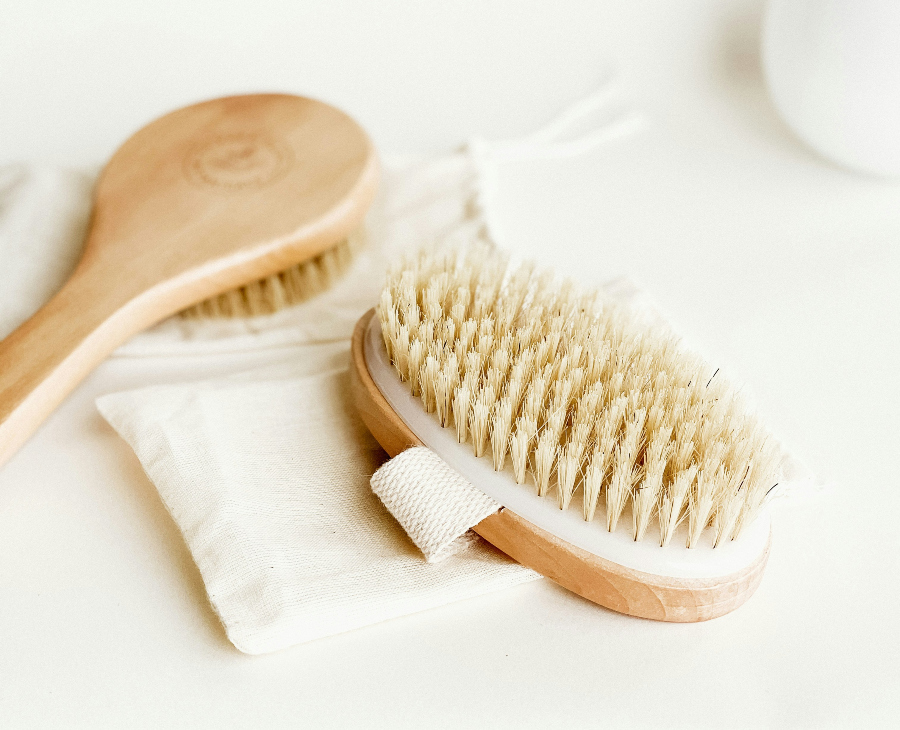
dry skin brushes

You will also need to capture details about your before and after assessments and tracking sheets to help you stay consistent.

If you haven’t already, grab my FREE Self Care Starter Pack which includes printables and walks you through the whole process.

How to do the Challenge

For the challenge you only have to do the basic routine at least 3 times a week for 4 weeks (28 days). * You can choose to skin brush every day

Assess and score your overall well-being – especially those areas mentioned at the start of this article – before you begin and again when you complete the dry skin brushing challenge. 

Remember you can use either a dry towel, special dry skin brush or loofah

Basic Routine

  • Start from your feet and brush upwards in long sweeps along the front, back and sides of your legs. Include your buttocks. Medium pressure.
  • Then go from your hands to your shoulder in the same manner. Don’t forget the back of your neck!
  • Use a circular (anticlockwise to mimic the colon and aid the process) movement across your abdomen and then for your armpits.
  • When it comes to your back, I always go upwards in short strokes from the base of my back and downward strokes from my shoulders. Don’t forget your sides under your arms which I do in short strokes.
  • I go very gently if at all, over my chest area and avoid my face

It should take less than 5-minutes.

I have never followed a set number of times to brush each area or complete the routine – my routine is more intuitive. 

Once is fine but if you intuitively feel that you want to do more – do! Remember the benefit comes from repeating the routine 3 times a week for 4 weeks.

Start with a mild pressure – this should not make the skin red and irritated.

Notice how you feel when you have completed your dry skin brush. It should feel good!

Then have your shower as normal.

Tweak the Dry Skin Brushing Challenge to Your Needs

Following the basic routine 3 times a week is enough to see results.

You can also choose to dry skin brush every day. I would not do it more than once a day.

You can also tweak the routine to your needs. If dry skin brushing makes your skin very irritated try a softer pressure or material.

There are detailed routines that work more closely with your lymphatic system which a naturopath might advise to support specific health conditions.

 And of course you can leave out certain areas of your body if you need to.

Advanced Skin Brushing

What if you want to focus mainly on your lymphatic system with dry skin brushing?

I like to combine dry skin brushing with a manual lymphatic drainage routine to open up my lymph nodes first ** Simple challenge coming soon.

You might find it interesting to check out this dry skin brushing technique for lymph movement HERE

Drinking enough water and daily movement will work really well with dry skin brushing.

Assessing your Dry Skin Brushing Challenge Results

At the end of the 28-days you complete another assessment.

What differences did you notice? Write them down. 

I just like how good dry skin brushing feels and how soft my skin feels afterwards and I also know I am helping my body detox better.

How about you? Is this self care practice something you will include in your regular self care menu?

Conclusion

Congratulations on completing your 5 Minutes to Feel Good in Your Skin: A 28-Day Dry Brushing Challenge!

I hope you’ve found this practice helpful, energising, and maybe even a little bit joyful.
After all, it’s not just about smoother skin — it’s about remembering the rest of you that’s been hiding under those winter layers.

And remember, one month is only the beginning.
Self-care — like glowing skin — builds with consistency. So keep brushing, keep noticing, and keep showing up for your body in these small, simple ways.

Because feeling good in your skin isn’t a quick fix — it’s a relationship that gets better the more time you spend together.

Well done image in Make Self Care Simple brand colours – completion of 28-day self-care challenge
Well-done! You have completed another step towards making selfcare simple

Take the First Step

We’ve all done it — promised ourselves we’d start that new healthy habit “tomorrow,” and felt oddly proud of the plan… until tomorrow never comes.

The truth is, self-care doesn’t need a perfect day — just a small, curious step today.
Your body learns from action, not intention.

The Self-Care Start-Up Toolkit helps you turn what you’ve learned into action — so your self-care finally becomes real, simple, and yours.

🌿Free Self-Care Start-Up Toolkit

Turn inspiration into action — with a simple system that helps self-care finally work with your body, not against it.

If you’ve been reading along and thinking, “I’d love to try this myself one day…” — you don’t have to wait, or wonder where to start.

The Free Self-Care Start-Up Toolkit gives you the gentle structure to make your first challenge easy, personal, and effective.
It’s the same step-by-step approach I use when following the challenges alongside you — so you’ll feel supported every step of the way.

Inside, you’ll find:
🌿 A gentle Before Assessment to pinpoint what your body truly needs — so you can stop guessing and start seeing real results
🌿 Step-by-step guidance (plus short video walkthroughs) to choose the right self-care.
🌿 Printable planners, reflections, and trackers to help you stay consistent
🌿 Access to our private community (coming soon!) — for gentle accountability and encouragement

You’ll also receive:
💌 Weekly self-care reminders, new challenges, and encouragement in the Make Self-Care Simple newsletter
🪴 Access to our free private community — where women share progress, celebrate wins, and remind each other we’re not alone

👉 Send Me My Free Toolkit

(Part of the Practical Self-Care Pathway — build habits that support your body’s natural balance.)

Real self-care is about listening to yourself.
Because being healthy isn’t always easy — but it can be made simple.

“Instant access—start your challenge today.”


Make Self Care Simple shares general self-care education for inspiration only. I’m not providing medical advice — always check what’s right for you with a qualified health professional.

©2025 Make Self Care Simple.

Print or save a summary of this challenge in the handy Challenge ‘Recipe’.
5 Minutes to Feel Good in Your Skin

28-day Dry Skin brushing Challenge

Equipment

  • 1 Towel
  • 1 Dry skin brush Optional
  • 1 Loofah Optional

Notes

How to do the Dry Skin Brushing Challenge

For the challenge you only have to do the basic dry skin brushing routine at least 3 times a week for 4 weeks (28 days).
Assess and score your overall well-being – especially those areas mentioned at the start of this article – before you begin and again when you complete the dry skin brushing challenge. 
You can use a dry towel, dry skin brush or loofah.
Basic Dry Skin Brushing Routine
  1. Start from your feet and brush upwards in long sweeps along the front, back and sides of your legs. Include your buttocks. Medium pressure.
  2. Then go from your hands to your shoulder in the same manner. Don’t forget the back of your neck!
  3. Use a circular (anticlockwise to mimic the colon and aid the process) movement across your abdomen and then for your armpits.
  4. When it comes to your back, I always go upwards in short strokes from the base of my back and downward strokes from my shoulders. Don’t forget your sides under your arms which I do in short strokes.
  5. I go very gently if at all, over my chest area and avoid my face 
 
Assess and score at the end of 28 days.
How did you get on?

You’d think drinking water would be the easiest healthy habit in the world.
And yet… here we are — another day, another half-full glass on the counter.

If plain water feels boring, forgettable, or just impossible to keep up with, you’re in good company. I’ve lost count of how many clients (and days!) I’ve had the same struggle.

That’s why this challenge keeps it as simple as possible — no huge bottles, no timers, no guilt trips.
Just small, steady sips that remind your body what it feels like to be properly hydrated again.

After all, self-care isn’t always about doing more — sometimes it’s just about remembering to drink what’s right in front of you.

Because apparently, coffee doesn’t count (I checked).

Jump to Recipe

The Intention

To gently reintroduce your body to regular hydration and create a rhythm that feels natural.
Like all Make Self-Care Simple challenges, you’re encouraged to adapt it to fit your own energy, lifestyle, and body’s needs.


Try this Challenge If:

  • You suspect you don’t drink enough water
  • You find water boring or forget to drink regularly
  • You struggle with fatigue, headaches, or sluggish digestion
  • You want a simple, low-effort self-care habit that makes a big difference

(Tip: I find this challenge especially helpful in the cooler months when it’s easy to forget to drink.)


Pin for later ?

What Is the Drink More Water Challenge?

Over the next 28 days, you’ll track and celebrate the days you meet your personal water goal.
You’ll start small — just five mini “sips” a day — and see what changes you notice in your energy, skin, and focus.

By the end of the challenge, you’ll have clear feedback on how hydration affects your wellbeing — and you’ll decide if you want to make it part of your regular routine.


Why Water Matters

Water supports nearly every function in your body — from energy and temperature regulation to digestion and brain function.

Even mild dehydration can affect your mood, concentration, and metabolism. Over time, it can also put stress on your kidneys and joints.

So, a little consistency really does go a long way.


How Much Water Do You Need?

There’s no perfect number. Everyone’s needs are different and depend on:

  • Temperature and weather
  • Activity level and sweating
  • Age, gender, health, and medications

Instead of chasing a fixed target, this challenge focuses on habit and awareness.
You’ll simply notice how your body feels as you drink more regularly.


Check-In Before You Begin

Spend one day observing how much you currently drink. Include everything — tea, coffee, smoothies, juice, and water.
Then ask:

  • How much of this is pure water?
  • How do I feel (energy, mood, focus, skin, digestion)?

You’ll use these notes to compare your “before” and “after” once the challenge ends.


The Simple 28-Day Drink More Water Challenge

For the next 28 days, drink at least 100 ml (about 3 fluid ounces) of plain water at these times:

1️⃣ Upon waking
2️⃣ Before breakfast
3️⃣ Before lunch
4️⃣ Before dinner
5️⃣ Before bed

That’s just five quick moments a day — about two big gulps each time.
Over 28 days, that adds up to around 14 litres (24½ pints) of pure water.

This is in addition to your normal beverages.


Why This Works

  • Small = achievable. 100 ml at a time feels easy, which helps you stay consistent.
  • Timing = benefit. Drinking before meals supports digestion and helps prevent overeating. Drinking on waking and before bed supports detox and hydration overnight.
  • Habit stacking = success. Pairing water with things you already do (like meals or brushing your teeth) helps make the habit automatic

Can I Drink Warm or Hot Water?

Yes! It all counts — cold, warm, or hot — as long as it’s plain water (no flavourings or sugar).
Some people find warm water easier to drink in cooler weather. Experiment and notice what feels best.


Want to Take It Further?

If this feels easy, you can gently increase:

  • Drink 150–200 ml each time instead of 100 ml
  • Or add another 100 ml after every bathroom break

You’ll get even more benefit without feeling overwhelmed.


Tracking Your Progress

Inside your toolkit

Tracking makes this more fun — and motivating!

Use your Drink More Water Tracker from the Free Self-Care Startup Kit or simply tick off each day in your journal.
After 28 days, compare how you feel.

Common improvements:

  • More steady energy
  • Clearer skin
  • Better digestion and regularity
  • Fewer headaches
  • Improved focus and less fatigue

If you don’t notice much change, that’s okay — it might mean your hydration was already good, or your body needs more time. Either way, awareness is progress.


Reflection & Integration

After 28 days:

  • Review your “before” and “after” notes
  • Notice small wins — even subtle ones
  • Decide if you’d like to continue or increase your daily intake

Remember, consistent small habits make the biggest difference


Final Thoughts — Stay Hydrated (Without the Pressure)

Congratulations on completing your 28-Day Drink More Water Challenge!
You’ve strengthened one of the simplest — and most powerful — self-care habits there is.

If you managed to drink more water than you spilled, forgot, or replaced with tea… that’s a win.
Because every small, consistent sip adds up — to better energy, clearer skin, and a lighter mood.

Keep listening to your body, keep your water nearby, and keep it simple.
And if you ever fall off the hydration wagon, don’t worry — your next sip is always a fresh start.

Why not invite a friend to join you next month? Hydration (like laughter) really is better when shared.

Because apparently, coffee still doesn’t count — but you’re doing brilliantly anyway.

Well done image in Make Self Care Simple brand colours – completion of 28-day self-care challenge
Well-done! You have completed another step towards making selfcare simple

Take the First Step…

We’ve all done it — promised ourselves we’d start that new healthy habit “tomorrow,” and felt oddly proud of the plan… until tomorrow never comes.

The truth is, self-care doesn’t need a perfect day — just a small, curious step today.

Your body learns from action, not intention. The Self-Care Start-Up Toolkit helps you turn what you’ve learned into action — so your self-care finally becomes real, simple, and yours.

Free Self-Care Start-Up Toolkit

Turn inspiration into lasting results — with a simple system that helps self-care finally work with your body, not against it.

If you’ve been reading along and thinking, “I’d love to try this myself one day…” — you don’t have to wait, or wonder where to start.

The Free Self-Care Start-Up Toolkit gives you the gentle structure to make your first challenge easy, personal, and effective.
It’s the same step-by-step approach I use when following the challenges alongside you — so you’ll feel supported every step of the way.

Inside, you’ll find:
🌿 A gentle Before Assessment to pinpoint what your body truly needs — so you can stop guessing and start seeing real results
🌿 Step-by-step guidance (plus short video walkthroughs) to choose the right self-care challenge for your needs — and actually complete it.
🌿 Printable planners, reflections, and trackers to help you stay consistent
🌿 Access to our private community (coming soon!) — for gentle accountability and encouragement

You’ll also receive:
💌 Weekly self-care reminders, new challenges, and encouragement in the Make Self-Care Simple newsletter
🪴 Access to our free private community — where women share progress, celebrate wins, and remind each other we’re not alone

👉 Get Your Free Toolkit & Join the Community

(Part of the Practical Self-Care Pathway — build habits that support your body’s natural balance.)

discover your selfcare blueprint

Make Self Care Simple shares general self-care education for inspiration only. I’m not providing medical advice — always check what’s right for you with a qualified health professional.

©2025 Make Self Care Simple.

Download your free handy challenge reminder!

28-Day Drink More Water Challenge

Prep Time1 day
Total Time28 days

Notes

28-day Drink More Water Challenge

Goal: Build a simple daily hydration habit
Duration: 28 days
You’ll Need: Water, glass or bottle, tracker or journal
Steps:
  1. Track your current intake for 1 day
  2. Drink 100 ml at 5 key times (morning, before meals, before bed)
  3. Log your progress daily
  4. Compare your before/after notes at the end
  5. Optional: Increase amount or frequency after week 2

Your body is constantly speaking to you through sensations, signals, and symptoms — but most of us have forgotten how to listen. This guide shows you how to recognise those messages and use them to create a personalised, responsive self-care practice.

How to Understand Symptoms as Your Body’s Way of Communicating


Why This Matters

The first and greatest self-care skill you can learn is how to listen to the wisdom of your own body.
Your body knows what it needs and is constantly communicating with you — if you know how to listen.

What I call body wisdom is a primal survival system — one that wild creatures still use instinctively, yet many of us have forgotten in modern life.

When you reconnect with this natural awareness, you gain:

  • Personal guidance and insight.
  • Confidence in your self-care choices.
  • A sense of partnership instead of frustration.

🌿You and your body are a team — you need each other.


Step 1 – Understanding Body Wisdom

Body wisdom is your ability to develop a deeper connection through active listening.
Your body constantly sends feedback through sensations, feelings, and especially symptoms.
Becoming aware of this feedback allows you to communicate and respond in real time.


Step 2 – Rethink What Symptoms Mean

Old view: symptoms are problems that need fixing.
New view: symptoms are messages — your body’s way of saying, “I need your help.”

When I was in my twenties and struggling with my health, I often felt betrayed by my body. I’d think, “Why can’t it just tell me what’s wrong?”
Now I know — it was telling me, through symptoms.

Your body’s goal is to keep you alive. When something is out of balance, its systems send you alerts designed to get your attention.


🌿Example – Dehydration in Action

If you don’t drink enough water, your body starts signalling for help.

Early warning signs:

  • Thirst
  • Dry mouth
  • Tiredness
  • Dark urine
  • Less frequent urination

Ignore these, and the signals grow louder: dizziness, headaches, fatigue.

Each symptom is a message:

“Please give me more fluids so I can function well.”

When you respond — and symptoms ease — your body says:

“Thank you, that’s exactly what I needed.”

🌿Next time you feel thirsty or tired, pause and ask:

“What might my body be trying to tell me?”


Step 3 – Listening as a Skill

Before I trained as a medical herbalist, I never listened to my body.
I saw fatigue and pain as failure, not feedback.
Now I see them as requests for help.

If we were all taught to interpret our symptoms as communication, our health journeys would look very different.

It’s never too late to start listening.


Step 4 – Notice How Loud Your Body Speaks

Your body uses volume to show urgency:

  • Whisper → mild symptom (dry mouth, stiffness, tiredness)
  • Talk → moderate symptom (fatigue, mild pain)
  • Shout → loud symptom (headache, sharp pain, exhaustion)

🌿Pain is a “red alert.” It’s your body shouting, “Something needs to change now.”


Step 5 – Start a Two-Way Conversation

Start a 2-way conversation

You already respond to many signals automatically:

  • Hungry → eat
  • Cold → add a layer
  • Full → stop eating

Now, extend that same awareness to subtler symptoms.

🧘 Try This: Mini Awareness Practice

  1. Notice a symptom.
  2. Ask: What was happening just before it appeared?
  3. Respond: Move, stretch, breathe, drink, or rest.
  4. Observe: Does it ease, worsen, or stay the same?

Example: when I sit writing for too long, I ache. That’s my body saying, “Move me.”
I stretch every 25 minutes; the ache fades — message received.


Step 6 – Track Your Symptoms

Think of it like the childhood “hot or cold” game:

  • Helpful change → symptom eases (warmer)
  • Unhelpful change → symptom persists (colder)

Tracking helps you discover what truly supports you.
You can learn more inside the Free Self-Care Start-Up Toolkit.


Step 7 – Supporting Your Body Without Silencing It

Support your body without silencing it
Medical Patient Drug Care Concept

Painkillers and medications are often essential tools that make life manageable. They quiet symptoms so you can function, rest, and recover — an important part of healing.

What’s helpful is to stay gently curious about what’s happening underneath:

“What might my body still need, even while I’m managing this symptom?”

Think of relief as a window of support — a time when your body has less stress and more capacity to heal.

Whether symptoms are temporary or ongoing:

  • Relief allows rest.
  • Awareness maintains connection.
  • Together they support long-term wellbeing.

🌿Using medication wisely and compassionately is self-care. Listening simply helps you work with your body, not against it.


Step 8 – Notice Subtlety and Responsiveness

Every body speaks differently. Some are loud and responsive; others are quieter.
The small, easily dismissed sensations — the “just me” moments — are often amber lights asking for early attention.

They’re also the first to change when your self-care is working.

Start small:

  • When do symptoms appear or fade?
  • What patterns do you see?
  • Which actions help most?

🧘 Step 9 – Make It a Daily Dialogue

Check in with your body often:

  • What do I feel right now?
  • What is my body asking for?
  • How does it respond when I listen?

With practice, this becomes second nature — a quiet, steady partnership guiding your wellbeing.


💡 Key Takeaways

Listening to your body — self-care awareness practice”
  • Symptoms are communication, not enemies.
  • Listening is self-care. Awareness is the first step to healing.
  • Tracking teaches your body’s language.
  • Relief and awareness can coexist.
  • Your body wants to feel good too. It just needs your help.

🌿 Reflection Prompt

How might your relationship with your body change if you treated every symptom as a message rather than a problem?

Well done image in Make Self Care Simple brand colours – completion of 28-day self-care challenge
Well-done! You have completed another step towards making selfcare simple

Start practising the art of listening — your body will thank you.

Awareness is powerful — but it becomes transformation when you track and apply it. The toolkit helps you put your insights into practice

Free Self-Care Start-Up Toolkit

Turn inspiration into lasting results — with a simple system that helps self-care finally work with your body, not against it.

If you’ve been reading along and thinking, “I’d love to try this myself one day…” — you don’t have to wait, or wonder where to start.

The Free Self-Care Start-Up Toolkit gives you the gentle structure to make your first challenge easy, personal, and effective.
It’s the same step-by-step approach I use when following the challenges alongside you — so you’ll feel supported every step of the way.

Inside, you’ll find:
🌿 A gentle Before Assessment to pinpoint what your body truly needs — so you can stop guessing and start seeing real results
🌿 Step-by-step guidance (plus short video walkthroughs) to choose the right self-care challenge for your needs — and actually complete it.
🌿 Printable planners, reflections, and trackers to help you stay consistent
🌿 Access to our private community (coming soon!) — for gentle accountability and encouragement

You’ll also receive:
💌 Weekly self-care reminders, new challenges, and encouragement in the Make Self-Care Simple newsletter
🪴 Access to our free private community — where women share progress, celebrate wins, and remind each other we’re not alone

👉 Send Me My Free Toolkit

🪻 Align & Uplift Pathway — reconnect with calm, joy, and emotional balance

Complete your first Self-care Challenge

Make Self Care Simple shares general self-care education for inspiration only. I’m not providing medical advice — always check what’s right for you with a qualified health professional.

©2025 Make Self Care Simple

This is my personal journey to heal myself from both SIBO and Histamine Intolerance that were part of my Long Covid diagnosis. In this blog post I share what I did next after recieiving a positive test for SIBO. Including what I could eat on a low fodmap histamine diet.

I was so relieved to finally have a concrete diagnosis after taking the SIBO test. After years of being told my results were ‘fine’ and ‘normal’, even though I didn’t feel fine or normal a positive results for Hydrogen SIBO felt like progress.

Of course I couldn’t know what was ahead of me – but I remember feeling positive and hopeful.

Histamine intolerance – really overload – (reactions) causes me various unpleasant and unexpected symptoms and SIBO explained a new uncomfortable swelling in my upper stomach – both conditions are linked to each other and Long Covid – you can read more HERE

The private test I paid for included not only the test results, but a 7-minute personal video and healing plan.

My results took about 2 weeks to come back and I made the most of this time.

I spent a lot of this time researching and making lists of foods that are low in both histamine and fodmaps (SIBO)

There is a LOT of information about foods, diet and recipes for low Histamine OR FODMAP but very little about what to eat when you need foods that are low in both!

My low fodmap histamine foodlist list was not very long.

Blueberries are about the only fruit. The only sweetener I could find was pure stevia drops (which I reacted to) or tiny amounts of Maple Syrup.

Nutbutter is essential for many of my recipes and the allowed list includes Pecan (quite bitter) Macadamia nuts (lovely!) and Hemp and Pumpkin seeds.** Check amounts and individual sensitivity. This is enough to enjoy milks, dressings, smoothies and treats!

Potatoes, parsnips, swedes, courgettes, broccoli, carrots, lettuce, kale and cucumber are the main vegetables. Onions are problematic, you can test just the green part of spring onions and leeks, and garlic olive oil.

Rice, oats and quinoa make up the grains. I struggle with rice.

Plain cook from scratch meat, fish and maybe eggs are OK – but if they have anything added they are not allowed. Also you have to freeze and defrost just before you cook. No left-overs hanging around. I had to avoid eggs and my weekly shop included (plain) roast turkey, chicken and salmon. With occassional red meat.

Olive oil and Ghee are both acceptable to cook with. I did get myself some garlic olive oil but had to only add drops to avoid any reaction. I read that full fat Mayonnaise is OK in small amounts ? – I found a brand that I tolerated (thank goodness) watered down to start with.

Vinegar and lemon juice are high in histamine and fodmap and after a lot of research I got myself Verjus** – sour unripe grape juice which in small amounts might be tolerated and tastes like a mellow vinegar.** Update I started to react

Many spices are high histamine and some herbs are high fodmaps so you have to proceed with caution.

Ginger is your best friend for flavour and to soothe your symptoms, to this you can add Turmeric, Cardamom and Lemon Grass.

Chamomile and Hibsicus and many other herbal teas are not allowed. But a pinch of dried herbs as seasoning I think is ok.

Is low histamine and fodmap Foodie Hell?

When I was researching how limited my food choices were – it did feel like foodie hell.

But I decided to focus on what I could eat and how I could adapt traditional recipes.

This was definitely a time to work on my mind-set because any hope of healing was on the other side of weeks/months of this diet.

They call it delayed gratification, go without now so you can enjoy later on.

This was not my forever food plan.

Aim for 90% Clean Eating

I aimed for 90% Clean. I included 2 weak cups of green tea, also a dash of almond milk twice a day in my rooibos tea. Once a week I had a Thai green curry and took an extra DAO capsule as I had already found that my body did not react to this. To start with I had watered down full-fat mayonnaise.

The problem is that I was reacting a LOT to things like body products, scents, chemicals, pollen and supplements.

Which wiped me out and while the diet is hugely beneficial it does take effort which you might not have in the beginning

Which is why, despite not being a good cook at all, with questionable taste buds, I have decided to share my recipes.

My Low Histamine/Fodmap Weekly Meal Plan

So here is my simple weekly food plan that is BOTH low histamine and fodmap – suitable for those suffering Histamine overload allergies and intolerances, MCAS, SIBO, Bacterial overgrowth, Gut Issues, with Fatigue

**I’m not a cook – so no measurements or detailed instructions!!!

Oats with Blueberries

Low fodmap histamine blueberry macadamia nut oats

I make an overnight oats version that only soaks for a couple of hours or heat gently and serve

  • I soak the oats and blueberries in ginger tea
  • I add macadamia or Pecan nut butter
  • Swap oats for rice flakes or quinoa
  • Add Stevia or maple syrup to taste

**I can’t tolerate stevia, and find macadamia nut butter sweet enough – but will add a tiny drop of maple syrup with Pecans which I find bitter

Blueberry Smoothie

More or less the same as oat recipe but I replace the oats with allowed greens such as lettuce, cucumber, kale.

Simply blend with cold ginger or mint tea.

This is very useful if the bowel slows down.

Salad, Protein and Potato

Low fodmap histamine spanish egg frittata

This is low fodmap histamine Spanish frittata – eggs and potato with lots of herbs **If you can tolerate eggs

I have potato/protein most days with a large salad!

  • Potato can be oven chips, jacket spud, new potatoes
  • Protein can be allowed plain poultry, meat or fish, frozen then defrosted in portion sizes.
  • Eggs – if tolerated
  • Salad is lettuce, shredded cabbage, cucumber, grated carrot

Finding a low histamine/fodmap salad dressing is almost impossible! I found that I can tolerate watered down shop-bought mayonnaise. You can use extra virgin olive oil with salt and pepper (helps with constipation). All vinegars and citrus are high histamine – some people can tolerate apple cider vinegar or distilled white vinegar. And most fruits are high fodmaps.

** Fresh lemon juice will be one of the first foods I ‘test’ back into my diet

Vegetable & Protein

So the goal here is to eventually find a gravy or sauce that you can tolerate.

Protein is again from the allowed plain poultry meat or fish list – frozen and defrosted in portion sizes. Eggs if tolerated. My choices include chicken, salmon, turkey with occassional lamb or beef.

My vegetable choices, which I mix and match include:

  • Broccoli and Carrots
  • Parsnip mash
  • Swede and Carrot mash
  • Sauted Cabbage
  • *Kale – to be included
  • *Roasted Radishes – to try!

If tolerated you can add ghee or drizzle olive oil. I season the vegetable water and add herbs and then save some when I drain the veg to make the mash or as a ‘jus’. Or you can save your protein juices as a ‘gravy’. I have found that I can tolerate shop-bought stock and gravy – after first taking a break and then ‘testing’.

Low fodmap/histamine Pesto/dressing

I didn’t want to leave you without sharing this idea! Parmesan and lemon juice are not low histamine or fodmap, nor is yeast flakes.

A low fodmap/histamine Pesto made with:

  • Fresh Basil, Mint, Parsley or Coriander (Cilantro) leaves
  • Macadamia or Pecan nut(butter), or Hemp seed or Pumpkin Seed
  • Extra Virgin Olive Oil or garlic infused oil
  • Seasoning (Opt chopped green onion leaves or chives)

Blend everything except the oil, which you add slowly. This can be adjusted to use over salad or meat and veg. When I’ve experimented a bit more I will share better details!

Simple Selfcare Tip!

Cook in bulk and freeze in portion size. There will be days when you feel too poorly to cook. Or days that go wrong when you have no time. Trust me it’s worth bulk cooking on ‘good’ days.

I plan to add more recipes but hope this provides ideas to get you started.

Next find out what my first steps were after testing positive for SIBO in week 2 HERE

If nothing else I hope this gives you an idea of what to expect if you suspect Histamine SIBO is the cause of any of your symptoms. Check the start of my journey here.

Developing a self-care practice around my personal healing journey was not only a powerful tool but incredibly empowering. Why not let me help you create your own menu of self-care practices?

In the early Spring of 2019 I ‘caught’ Covid-19 and by 2022 my symptoms put me in the ‘Long Covid – unexplained’ box at my local health centre . Since then I have been on a long journey back to health.

My experience of ‘Long Covid’ became the catalyst for creating the Make Selfcare Simple blog because simple self-care gave me the strength to get through each day.

This is my ‘Long covid’ story, it’s messy, I make mistakes, wrong choices, but also have breakthroughs, gain insights and slowly find answers for myself.

My story includes Long-covid, Chronic fatigue, SIBO/IBS, MCAS/Histamine/Allergy, Asthma, Skin issues and lots ofperfect test’ results that don’t help at all.

Honestly I am not sure how helpful sharing my story is, maybe reading my story will let you know you are not alone on your journey?

START your Challenge!

This is longer than I expected!

Why did I get Long-Covid?

I qualified (Master Herbalist & Natural Healer) way back in my early 30’s and went on to improve my well-being (I’d been poorly all of my 20’s) consistently for over 25 years until my mid-fifties.

So how come I was left with Long-Covid?

The answer is simple – Stress. I went though a difficult divorce and then my teenage daughter became very poorly (umpteen hospital appointments)for the next 5 years, I lost my dad suddenly, a new business venture had the plug-pulled and we moved home 7 times in 5 years.

I remember feeling this crushing responsibility.

Long-term Stress switches off your repair and maintenance systems.

My Long-covid Symptoms

I was quite poorly with long-covid, typical flu, breathing issues, and gastric flu symptoms all at once. But it passed and was over within a week.

But from that week my health has never been ‘right’.

Including 15 months of recurrent episodes of debilitating gastric flu and chest infections.

Gradually I started to have increasing random symptoms:

  • IBS – various and changing
  • Itchy ears – ezema inside my ear
  • Increasing Sinus infections
  • Asthma that started and finished very quickly
  • Weird skin rashes, from painful acne to rashes on my skin and inside my mouth and throat
  • Increasing joint pain, weakness and swelling
  • Hair loss one side of my head
  • Sinus swelling behind my right eye (extremely painful)
  • Feeling dizzy light headed in the head but my legs felt like lead
  • Low Blood Pressure
  • Fuzzy head and poor memory
  • Extreme Fatigue

Unfortunately this was during Covid. I still had to work and look after my daughter (single mum) and my local heath centre were unable to help.

The tests came back ‘good’ or as my GP told me, my tests were actually perfect for my ‘age’.

But I didn’t feel perfect.

Eventually my GP diagnosed me as having Long Covid because my health before and after Covid was so different.

Diagnosing Myself

The remedies I had used successfully for 25 years couldn’t help me this time

For a while I used my usual herbal remedies, essential oils, homeopathic pills, supplements and dietary changes. Remedies that had worked perfectly for the last 25 years based on supporting my inherited constitution.

And I seemed to get worse.

My local surgery offered me steroid inhaler for my asthma, steroids for my sinus, anti-histamines, Pronton Pump Inhibitors (PPI) and even HRT to ‘see’ if they ‘helped’.

I used a nasal steroid for my swollen sinus face once – but the next day the swollen face was gone and replaced with my right eye looking like something from a horror film. The ‘sinus reaction’ had escaped to the sinus area behind my eye.

I already had a long history of ‘reacting badly’ to normal medications and wasn’t convinced ‘testing’ by medication was the right path for me.

By this time I was worried and frustrated.

Without a concrete ‘diagnosis’ I was stuck in the dark.

I knew from my practitioner training that I needed to find a ‘root cause’ – but Long-Covid is cloaked in mystery.

The one ‘strange’ but consistent symptom pattern was waking up in the early morning with a ‘reaction’ usually sinus/skin rash/itchy ears which then developed into feeling faint, dizzy light-headed, followed by IBS symptoms and then joint pain/swelling and extreme fatigue.

This was a consistent pattern (70% of the time) – whatever I did during the day, my reaction seemed to happen between 3 – 5am the next morning. Weird right?

(Apart from quick onset asthma to chemical fumes/scents which were frightening)

I got tested for autoimmune which came back as negative.

Eventually I came across Mast Cell Activation Syndrome (MCAS) which finally seemed to describe me!

Mast Cell Activation Syndrome (MCAS)

According to the WebMD MCAS is “Mast cell activation syndrome, also called MCAS or mast cell activation disorder, is a condition that causes mast cells to release high amounts of chemicals into your body. This chemical release causes you to have many symptoms.

I spent almost a year researching MCAS. There is a lot of information online. But here in the UK after waiting months for an appointment an Allergy consultant told me ‘ we don’t recognise it here in the UK’. And shoved me out the door in under 10 minutes.

Yes I still feel bitter about that.

The harsh truth is that it is difficult to test for MCAS or histamine intolerance – unless and maybe even if you go private.

By this time I had no social life (apart from work) and had to leave at least two jobs because I reacted to something in the work place. By this time I was having sudden scary reactions to chemicals, perfumes and scents including essential oils – so I went into recluse mode.

Through trial and error (and many reactions) I confirmed foods high in histamine or histamine liberators were an issue for me.

Even healthy foods, herbs, essential oils and supplements can be high histamine.

A low histamine diet really helped. So did taking Diamine Oxidase enzymes and Saccharomyces Boulardii.

Some people follow a histamine bucket approach where they can strategically include a few higher histamine foods if they keep their overall lifestyle low histamine.

Other people take various anti-histamines but there is conflicting information about the long-term impact of switching off the bodies alert signal from the immune system. *With conditions like MCAS you may need to take both H1 & H2 blocking antihistamines and at much bigger dose.

Call me stubborn, but I still wanted to find the root cause and heal myself.

Insights from Living with MCAS / Long Covid

I firmly believe that the most healing diet is when you can eat a full varied diet. The low-histamine diet on top of my existing dairy and gluten-free requirements was incredibly limited.

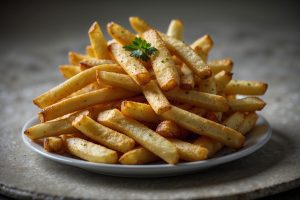
Turns out that I could eat chips and plain crisps with no reaction – and boy did I make the most of this!

I spent hours researching ‘alternative’ recipes which was my inspiration for creating the ‘Nourish‘ Challenges. My beautiful kind daughter was very tolerant of my experiments and meal time choices

And if I ‘cheated’ or accidently ate a food that was high in histamine or an histamine liberator I was ‘punished’ with painful and weird symptoms.

I would wake early morning in agony with one red swollen eye and an unhealthy ‘pressure pain’ behind my eye. I would boil a kettle and grab a bowl and towel and steam my face. My eye would stream thick clear gunk and there was revolting post nasal drip. After this I could open my eye and see, but the whites of my eye were blood red. Nice. I would repeat steaming and use a heated eye-pack and my eye and the pain would slowly return to normal within 2-3 hours.

Then would follow various strange symptoms, sometimes I had a tight chest and lost my voice, I often felt dizzy and light headed and ‘wobbly’, and worse for me was that my head felt fuzzy and muddled. There would be pain in my neck, hips, and knees and sometimes my hands and feet would become swollen and painful. And for ‘days’ I would feel wiped out. Just in time for the next reaction.

I share this because so many people said they also suffer with ‘hay-fever’. This was not the same as hay-fever although hayfever may be linked to histamine overload.

I had a lot of problems with supplements and ‘natural’ remedies that also caused reactions. DAO (Diamine Oxidase) which is a miracle support for me, but when my supplier ran out (!) I reacted to each alternative I tried.

Let’s talk about my hair!

I quickly found that hair products including shampoo caused really big reactions. The more often I was reactive the more I noticed hair loss and just on one side of my head!

Honestly I spent a fortune on trying different ‘natural’ shampoos. If I didn’t react to the shampoo then it didn’t suit my hair. Call me vain but hair like straw is not a good look. Yes even the no-poo curly hair shampoo caused reactions. So did organic ones made with essential oils.

In fact it is very expensive having a reactive body! In the end I found an inexpensive unscented shampoo bar. It was the same story with all my body and cleaning products. Many essential oils trigger a reaction.

Reacting to Nature!

I also reacted to nature! As a former natural therapist & herbalist the irony is not lost on me. Grass and tree pollen were problematic and so was any time spent in my garden or walking my dog (RIP my beloved Sox).

Symptoms-body-wisdom-make-selfcare-simple
Replacing lawns with beefriendly plants

My home and street is surrounded by grass – that needs regular cutting. I did remove almost all of my lawns and just prayed that the replacement plants were kind to me. I also gave up my dream of walking holidays and permculture forest gardening.

Most ordinary people would by now have taken all the anti-histamines!

I will try to explain.

Call it intuition, pig-headedness or dilusional thinking but I 100% believe that if I can find the root cause then I can find a healthy way to support my body to recover and repair.

And that was the problem with a MCAS or Histamine reactions or Long Covid Diagnosis – none of them gave me a root cause I could work with.

Whole Body Healing

Diet and supplements are never the whole picture when it comes to healing.

I include (where possible) many self-care practices in my daily routine.

Pssst my regular newsletter is where I share more details about my current self-care practice.HERE

Close family and friends are my life-line and are incredibly important to my whole body healing. I am still at the time of writing this, pretty much living like a recluse.

The enforced isolation that you can experience on the healing journey is one reason I would like to create an online self-care community.

I recently lost my beloved dog Sox, and know first hand how healing our pets can be and how real the grief of losing them is.

My beloved companion Sox – big part of my healing journey

Something else that I believe is that the body mind and soul are all connected.

Specifically I think that past experiences especially trauma links the mind to physical illness. So I was aware that my set of symptoms directly linked to fear – the world literally felt unsafe for me.

I am not a worrier by nature. But in iridology I have the golden eye which is linked to kidneys and fear. I deal with my fear (of histamine reactions) by controlling my situation and avoidance.

Which in one way is prefectly normal and practical.

So another part of my healing journey is to look at fear. I scheduled therapy sessions which were really helpful and have noticed that recognising my fear pattern is helpful in reducing my symptoms.

This is where Journal work has also been helpful.

Dealing with trauma or past experiences that impact your current health, is a work-in-progress for me.

However I am also cautious about getting stuck in your past – while its helpful to identify previous causes and patterns – please know that the focus should be on creating a better future.

I also try to avoid blame in all its forms. Tricky because it is so satisfying to give the blame to someone else.

Instead I try to ask:

How am I now going to respond to this situation?

What new and better choices and decisions will actually improve my future and bring me inner-peace?

Light at the end of the tunnel?

magical summer sunrise

Whew well done if you’ve made it this far!

I had a bit of a ‘red herring‘ in that both my daughter and father had genetic Haemochromatosis (Iron overload) which interestingly can display many similar symptoms to what I experienced.

It took months to wait for tests and results – and I was hopeful that I’d found my root cause.

But no surprise my liver came back as ‘fine’ and blood tests confirmed I am just a carrier.

I am sure many of you have been in this strange situation where you almost want a test result to show something!

If my story does nothing else, it highlights the frustration of test results!

New Symptom – Upper Stomach Swelling

Anyway earlier this year 2025 I noticed a swelling in my upper stomach.

I thought it might be a flare-up of diastasis recti (caused by having C-section complications 20 odd years ago) and started following the exercises. NB I do think I have DR

However my stomach swelling quickly got larger and more painful despite me eating less food. It was a strange ‘stretched feeling’.

More tests and examinations followed all showing as fine!

Grrrrr

My GP was really pushing for Omeprazole – which conflicts with DAO – so I had a dilemma.

But for once my attention was on my IBS not my histamine reactions.

Honestly my IBS symptoms were much easier to deal with except now I had a painful swelling I couldn’t ignore.

Handy reminder to myself that ALL symptoms no matter how small are important

Long story short I started to consider SIBO Small Intestinal Bacterial Overgrowth.

SIBO can cause painful upper stomach swelling reduces DAO from being made in the body – ding dong! And there is a direct link between SIBO and Histamine intolerance (MCAS). AND Omeprazole can increase the risk of SIBO.

I couldn’t get tested for SIBO on the NHS so I went private.

My test result was positive for Hydrogen SIBO!!

Taking a rest!

Which brings me to the end of this mammoth post.

And the start of a brand new post.

This was my personal story about stubbornly holding out to find a root cause, probably a bit extreme to most people.

If you only take medicines to reduce/hide symptoms – without addressing the root cause – the body will keep giving you new symptoms

I quickly discovered that being tested positive for SIBO was just the first step and that there is very little free support/guidance for when you have both Histamine/MCAS and SIBO together.

So that is what I will share next my journey to address my root cause!

Self-Care

What I haven’t talked about is my regular daily self-care practice – which has been a crucial part of my whole journey.

I do not think I would have survived this last few years without a self-care practice supporting my poor body each step of the way.

Join my newsletter to read my current experiences and adventures with self-care as I follow along with you!